
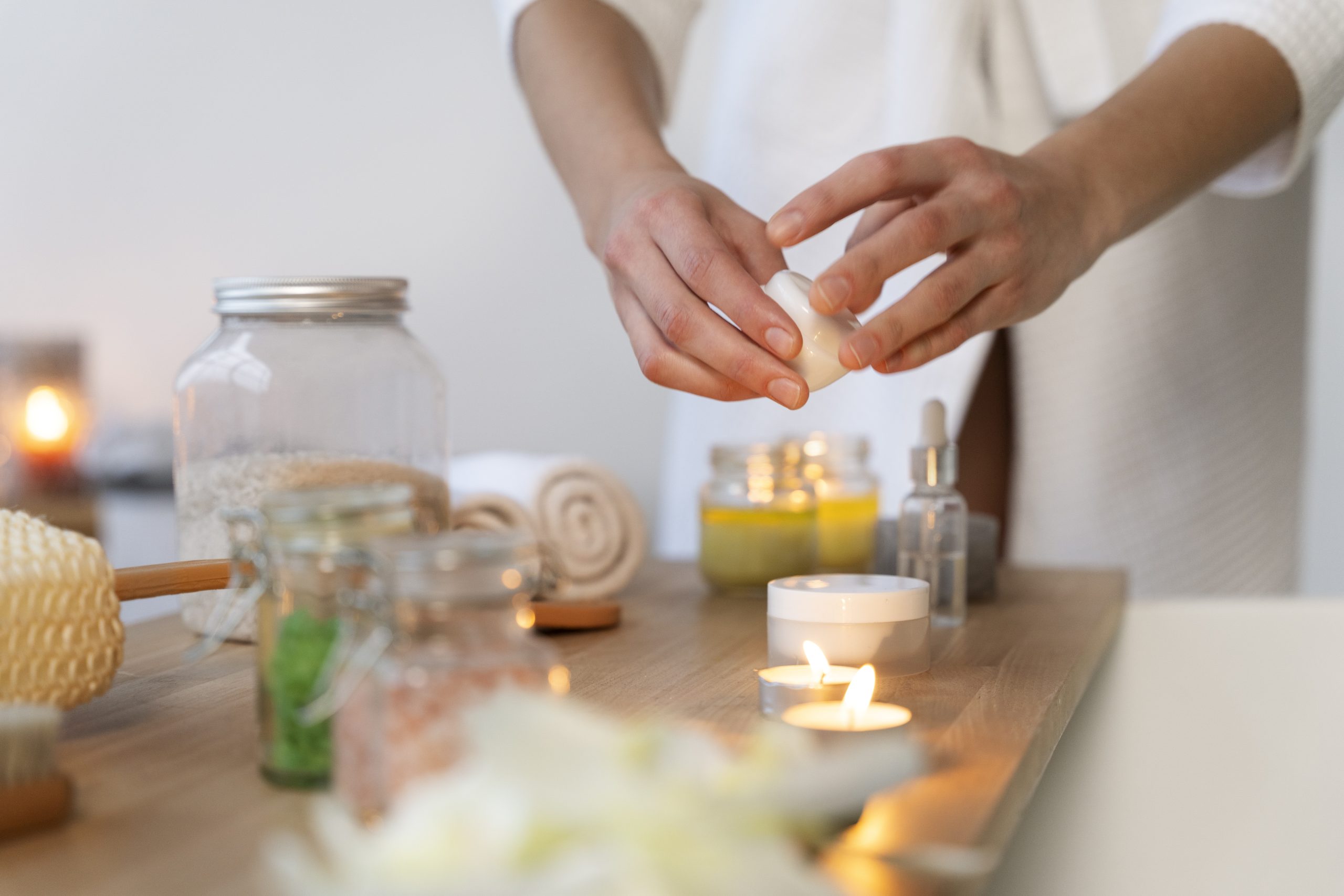
Aromatherapy is considered a form of alternative medicine. It involves the use of natural essential oils, which are introduced into the body through the respiratory tract, skin or mucous membranes. It is based on the use of known therapeutic and therapeutic properties of plants.
How does aromatherapy work?
The path of smell from essential oils runs from the olfactory cells in the nose, to the olfactory system. It is assumed that both inhalation and application of oils to the skin stimulate the corresponding points in the limbic system, making aromatherapy with oils very versatile.
We can apply essential oils by inhalation, topically on the skin and by direct ingestion. They easily penetrate from the intestines into the blood, and are excreted through the lungs with exhaled air, as well as with urine, and sweat. Inhalations can be carried out on material sprinkled with the oil, by inhaling the oil directly from the bottle or by adding it to a bowl of hot water and inhaling the scent.
Aromatherapy - history
Essential oils already since ancient times used as an important ingredient in cosmetics and medicines.
As people in ancient times believed in the nutritional power of extracts from particular plants, they used them for various purposes. References to their use for medicinal purposes have been encountered in China, India, Persia and Egypt, among others. Researchers of the Far East show that fragrant extracts were used in many medicinal treatments as early as 5,000 years ago. Aromas were widely used in the lives of the ancient Egyptians. Cleopatra, who suffered from insomnia, is said to have filled her pillows with rose petals. This provided her with a good night's sleep and beautiful dreams. The Hindus, on the other hand, believed that aromas opened the soul and mind. The Arab physician Avicenna also described various plants and their effects on the human body.
In Europe, the Greeks and Romans also knew the beneficial effects of aromatic essences. Hippocrates recommended aromatic baths and therapeutic oil massages to his patients. In time, the ancient Greeks passed on their knowledge of aromatherapy to the Romans. And when plague struck England in the 17th century, essential oils were used because of their antiseptic properties.
Aromatherapy in modern times
The term aromatherapy was introduced in the 1920s by the French chemist Rene Gattefosse. At the time, he was researching the antiseptic and antibacterial properties of essential oils. When he accidentally dipped his burned hand in standing lavender oil, he noticed that the burn healed faster, leaving no scars. Gattefosse used oils as antiseptics, disinfecting the wounds of soldiers during the First World War.
One of the most important was also the study on the salutary effects of essential oils by Dr Jean Valnet. He also helped to heal the wounds of soldiers during the Second World War using them. In 1950, his student M. Maury demonstrated the effects of combining oils with a massage technique.
In recent years, on the other hand, Austrian neuroradiologists have demonstrated that certain aromatic substances strongly improve the blood supply to the brain and stimulate the cerebral cortex directly, and that inhaled oils are able to penetrate the blood-brain barrier. Today, an important expert in the field of aromatherapy is Robert Tisserand founder of two aromatherapy associations in England.
Effects of aromatherapy
Essential oils are highly concentrated plant extracts. Depending on the volatile compounds, they can exhibit different properties. They can be used on their own as well as in mixtures. Their effects include:
- improved blood supply to the mucosa,
- stimulation of secretory functions,
- liquefaction of mucous secretions, resulting in decongestion of the airways,
- alleviating inflammation and infection,
- a feeling of relief in the nasal cavity,
- disinfectant properties,
- Diastolic, diuretic, diaphoretic and obstructive effects,
- massage support.
Effect of essential oils on the body
Mood-enhancing oils include bergamot, lavender, patchouli, vanilla, geranium, chamomile, jasmine, ylang-ylang, grapefruit, frankincense and neroli. On the other hand, the following oils are used for stress: lavender, rose petal, bergamot, ylang-ylang, chamomile, lemon balm, jasmine, sage, neroli and basil. On the other hand, during colds, pine, eucalyptus, thyme, peppermint and tea tree oils are recommended.
With the oils of lavender, basil, rosemary, geranium or lemon, we can in turn improve concentration. In addition, rosemary, thyme and geranium oils are believed to raise blood pressure, while juniper, lavender, sage and melissa oils are believed to lower it.



