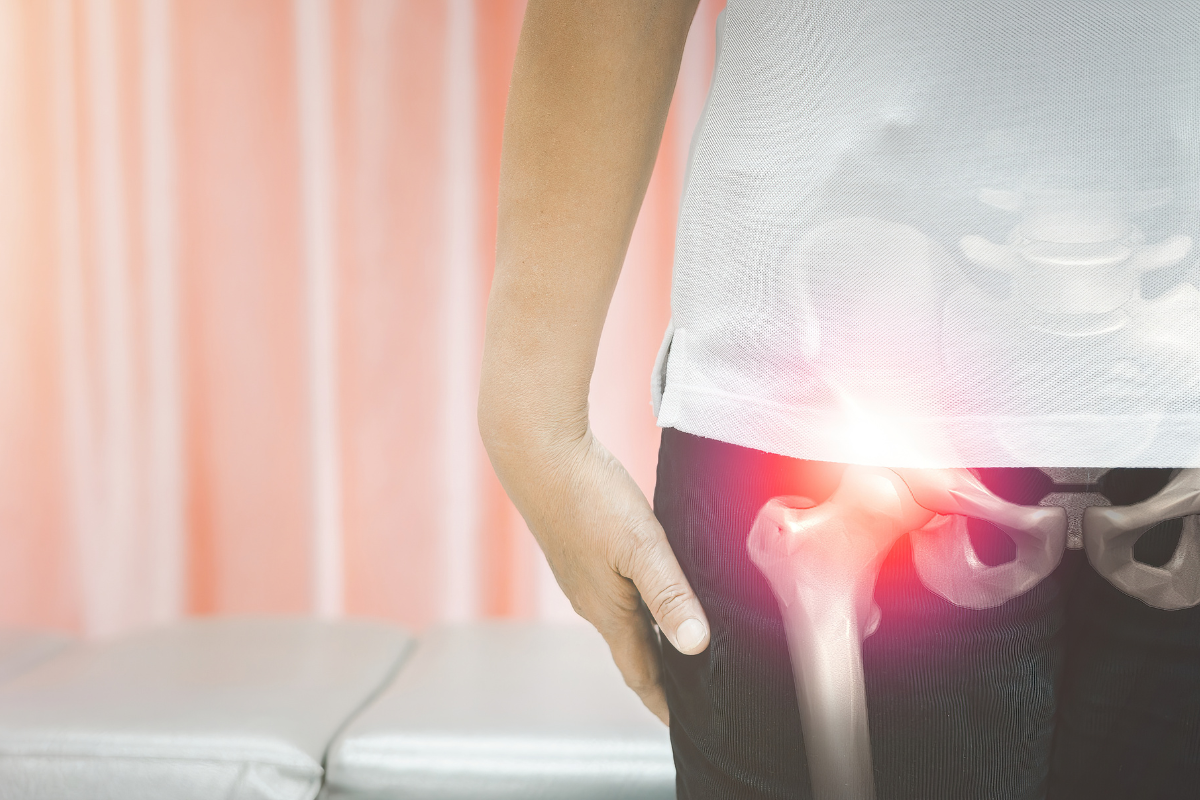
Hip pain can occur in any of us. The structure of the hip joint makes it easier for us to move smoothly and allows us to walk, run, climb or squat. When our muscles, ligaments, nerves and tendons are subjected to stress, especially in older people, hip pain can occur, indicating a number of serious conditions.
Hip pain - causes
The most common causes of hip pain include:
- hip arthritis,
- osteoarthritis, or coxarthrosis,
- bone fractures,
- bone dislocations due to trauma,
- inflammation of the fluid-filled 'bags', i.e. synovitis,
- sciatica.
In addition, diseases such as:
- fracture of the neck of the femur or pelvic bone or dislocation of the hip joint,
- congenital changes in the structure of the acetabulum, such as dysplasia, manifested by instability or shortening of the leg,
- joint-muscle imbalance,
- pressure on a nerve arising in the lumbar or lumbosacral region of the spine,
- Parthes' disease characterised by limping, restriction of movement, stiffness in the hip and visible flattening of the buttock.
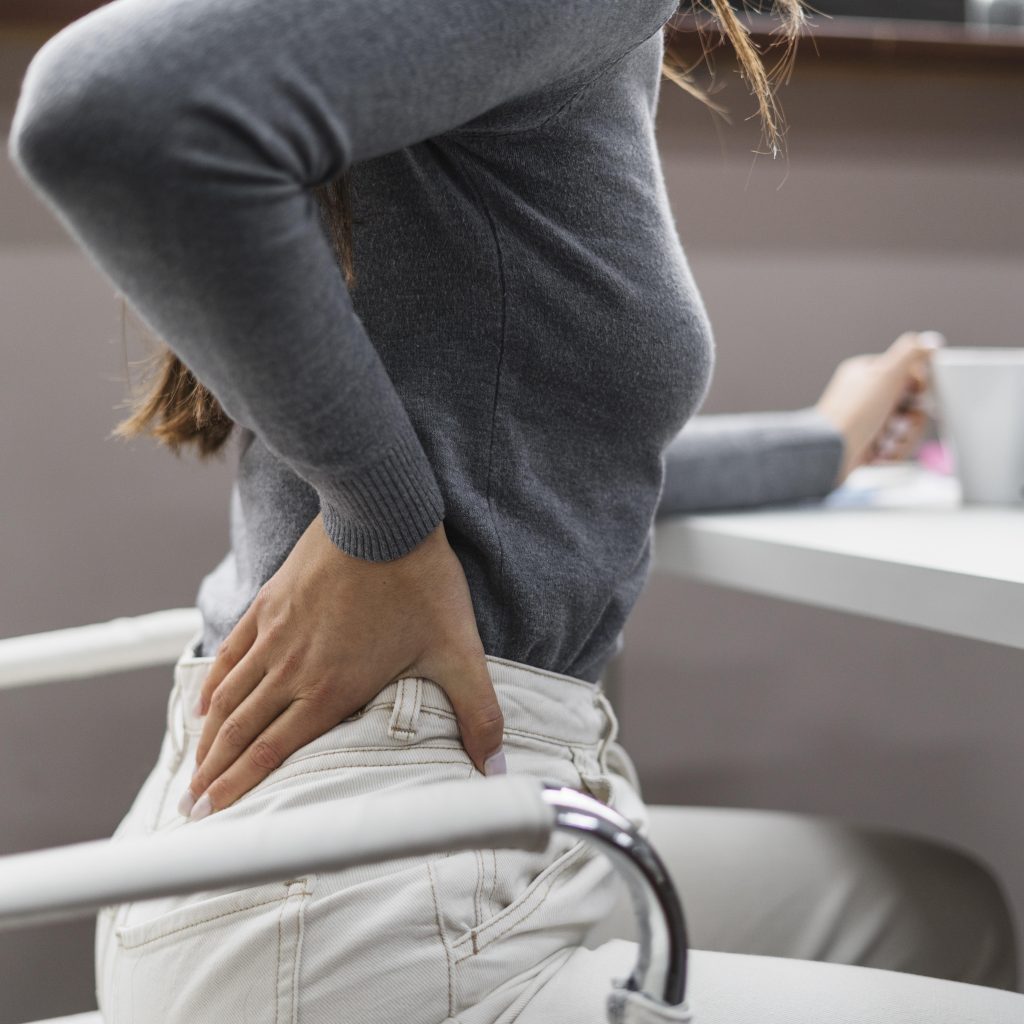
The most common risk factors for hip pain also include overexertion due to intensive sporting activities, overexertion, being in a highly stressful position for long periods of time, such as sitting for long periods of time, e.g. in a car seat for professional drivers, and falls and injuries among sports players or the elderly.
Also, hip osteoarthritis is one of the most common conditions associated with hip pain. It is particularly common in people over the age of 60, when their articular cartilage becomes damaged.
Hip pain - the first signs of hip dysfunction
Dysfunction of the hip joint can manifest as pain, among other things:
- in the groin,
- in the sacral region,
- pain and tingling in the lateral side of the hip.
Sometimes the pain experienced may also be accompanied by dizziness, nausea and vomiting.
How do you treat hip pain?
Treatment of a sore hip in the initial phase consists primarily of the use of physiotherapy and exercises performed. The first stage involves relieving the strained muscle groups by temporary immobilisation of the joint. This can be achieved with a properly fitted hip brace and the use of crutches, canes, walkers or orthopaedic insoles, which enable the restoration of correct posture and reduce tension. Physiotherapy treatments of the following types are also recommended:
- cryotherapy;
- magnetotherapy;
- ultrasound;
- kinesiotaping;
- laser;
- TENS currents;
- phonophresis;
- sollux lamp.
In addition, treatment can be enhanced by:
- use of anti-inflammatory and analgesic drugs;
- exercises to strengthen individual muscle groups;
- the use of ointments as well as injections with glucocorticosteroids or concentrated hyaluronic acid;
- massages.
If the patient develops advanced degenerative changes or more serious damage to the hip joint, then surgical treatment in the form of hip endoprosthesis implantation, i.e. replacement with artificial components, is used.
Treatment of hip pain at MTS Holistic Therapy
TRE method is an approach that uses specific physical exercises to release tensions built up in the body as a result of stress or trauma. In the context of hip pain, TRE can help to relax the muscles and joints around the hip, improving mobility and reducing pain resulting from muscular and emotional tensions.
Microcurrent therapy is a modern method that uses low-voltage electrical pulses to stimulate regenerative processes in the body. When used to treat hip pain, it helps to reduce inflammation, accelerate tissue healing and improve blood circulation, which can significantly reduce pain and restore hip function.
Chiropractic is a method of treatment that involves the manual adjustment of vertebrae and joints. In the case of hip pain, the chiropractor may perform manipulations that help to improve the alignment of the joint and reduce tension in the surrounding muscles and joints. This works to restore normal joint mobility and relieve discomfort.
Manual therapy is a range of therapeutic techniques that use manual manipulation of soft tissues and joints to improve their function. For hip pain, manual therapy may include massage, joint mobilisations and stretching and strengthening exercises to help restore full hip function and reduce pain.

Hip pain - why does it recur and what are the risks of ignoring it?
The hips perform a huge amount of movements every day. If this part of the body is neglected, over time we start to experience pain in them. Pain in the hip can radiate to the back, foot, groin, buttocks and cause us to start avoiding putting weight on our limbs, which affects our entire posture and causes our activity to decrease significantly and our quality of life to deteriorate significantly.
Many patients completely underestimate the initial hip pain. A sustained injury develops in the early stages and the pain becomes more and more persistent. Unfortunately, some people prefer to take painkillers rather than take treatment, and this is when their recovery is most prolonged and painful. The sooner we decide to take action, the more we reduce the risk of having to have surgery, resulting in scarring and a stay in hospital