
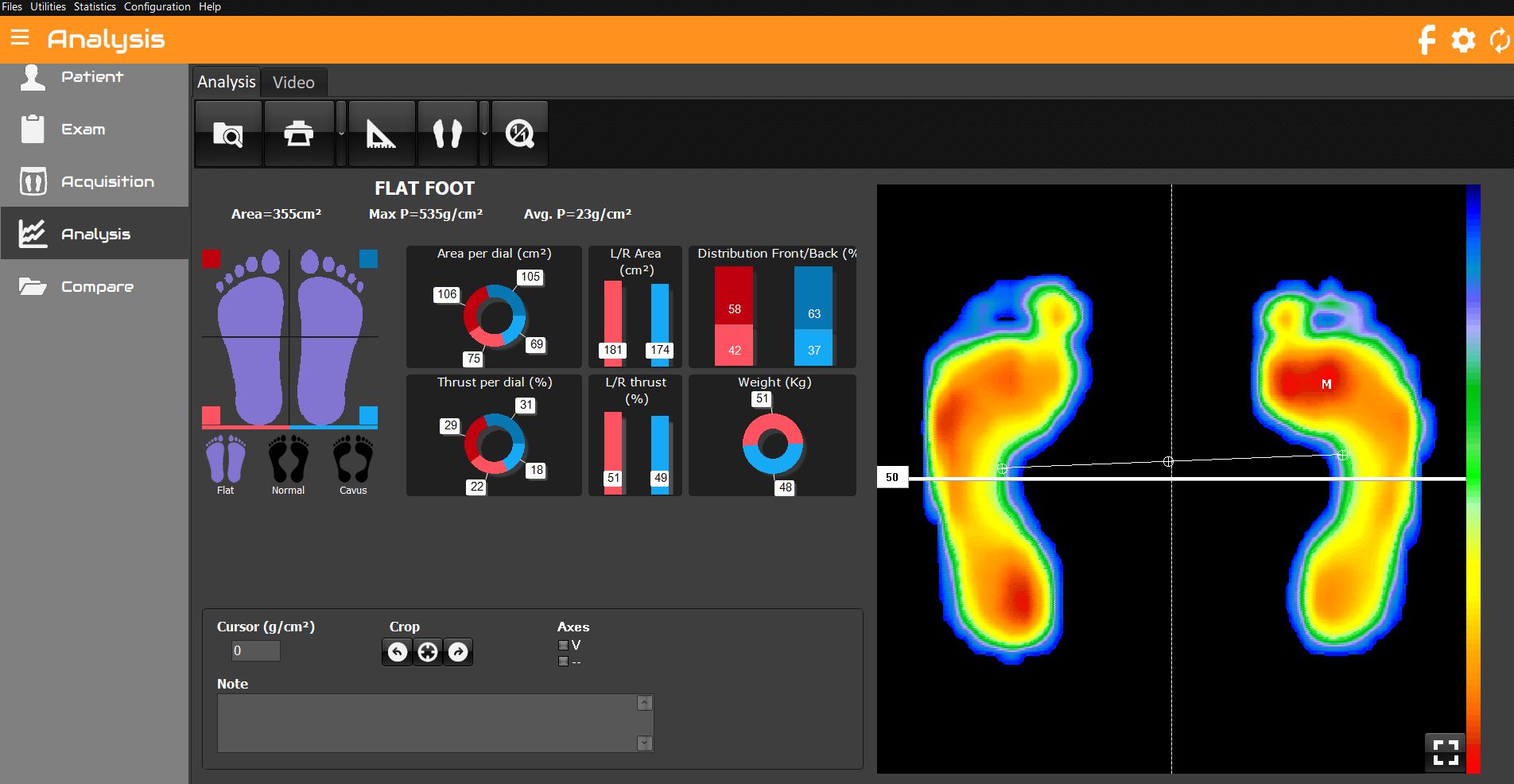
The subarometry mat test (computerised foot test) involves a detailed analysis of the distribution of foot pressure on the ground. A special mat equipped with pressure sensors records every point of contact between the foot and the ground, both when standing and walking. This data is sent to a computer, which creates an image showing the forces acting on the different areas of the feet, analysing the body's balance and the way it moves.
No, the examination is completely painless and safe. It involves natural movements such as standing, walking or standing on one foot. The subarometry mat acts as a flat device on which you stand barefoot, so there is no discomfort.
The duration of the examination is approximately fifteen to thirty minutes. This depends on the type of analysis the specialist performs. Additional tests, such as gait analysis or dynamic balance assessment, may increase the examination time, but the standard procedure usually takes a short time.
No special preparation is necessary. All you need is a comfortable outfit that allows you to move freely. Before the examination, shoes and socks should be removed so that your feet can freely touch the surface of the mat.
The examination is only performed barefoot, as precise analysis requires direct contact between the feet and the mat. In footwear, pressure distribution and foot biomechanics cannot be accurately assessed.
Yes, the examination is safe for any age group. In children, it helps to assess foot development and detect early postural defects, and in seniors, it helps to diagnose changes due to age. Pregnant women can also benefit from the examination, especially if they experience back pain or changes in gait due to increased body weight.
The subarometry mat records and analyses:
- distribution of foot pressure on the ground,
- load asymmetry between the right and left sides,
- the way the feet are placed when walking,
- body balance,
- the presence of biomechanical defects such as flat feet or knee valgus,
- overstressed areas that may cause pain or deformities.
Yes, this is one of the main indications for this examination. Many complaints of joint or spinal pain are due to abnormal pressure distribution or postural defects. A computerised foot examination helps identify the cause of the problem so that appropriate treatment or therapy can be selected.
Yes, the results are available immediately after the examination. The specialist discusses them on the spot, explaining the significance of each parameter and suggesting further steps, such as the selection of orthotics or therapy.
Yes, the analysis carried out on the subarometry mat helps to determine the source of the pain. On this basis, the specialist can suggest effective treatment, such as individual orthotics, corrective exercises or physiotherapy. In this way, the strain on the painful areas can be reduced and daily life can be made more comfortable.
Yes, the test detects with great precision:
- Flat feet: analysis shows reduced height of the foot arch.
- Knee valgus: differences in pressure distribution on the inner and outer parts of the feet.
- Differences in leg length: evident through asymmetry of body load and changes in walking patterns.
Yes, the results of the study help in the selection of orthotics and therapy, which significantly improves comfort in everyday life. They reduce stress on the joints and spine, improve balance and the way you walk, which you will particularly feel when standing or walking for long periods.
