There are some cases that persistently return - the patient exercises, stretches, rolls, and the hip still reminds of itself with every step. It doesn't seem to hurt all the time, but just climb the stairs or sit for a longer period of time and the familiar stabbing sensation begins. An ailment that on the surface looks like a strain can drive a wedge into the comfort of everyday life.In the practice, I often hear: „I've already been to manual therapy, had massages, had needles - nothing helped”. And yet, after a few sessions of pinopressure, the same patient can come off the couch with a smile and the surprise that it no longer hurts?.
Why classic techniques don't always work
With a hip it's like a door - if the hinge jams, it's not always the fault of the door itself. Sometimes it's the doorframe, sometimes it's something underneath. In the body, it can be similar. When there is pain in the area of the greater ileum, intuition tells us: you need to massage, loosen up, stretch. The problem is that the source of the tension often sits deeper.
Classical manual therapy can relax the gluteal muscles, adductors, stretch the fascia. But if micro-tension is not defused where it really started - the attachments, the points connecting the fascia to the periosteum - the effect is sometimes short-lived. The patient returns, and the hip is reminded of itself again.
Lifestyle can sometimes be to blame. Too much sitting, not enough rotation or badly fitted shoes - all these things can overload the greater ileum area. And when the vertebral column starts to „pull”, the body sets off a chain reaction: the gluteal muscles tighten like a rope, the flexors lock, and the patient unconsciously avoids the load. Then even the best massage or needling acts like a temporary computer reset - it helps, but only until the next overload.
How pinopressure unlocks tension around the ileum
Pinopressure works where other techniques often stop. It is precise work on points that control musculo-fascial tension. Instead of needles, the therapist uses steel pins and pinocats - tools that are extensions of the hands. In pinopressure, it is not the force that matters, but the direction, depth and sequence of pressure.
When the right point is stimulated, the body reacts immediately. The patient feels warmth, relaxation or a „letting go” in the groin. This is the effect of a nerve impulse that tells the nervous system to „reset” the area in question. In this way, pinopressure makes it possible to reach structures that are resistant to classic massage or mobilisation.
Hip pinopressure and the greater ileum - key points of work
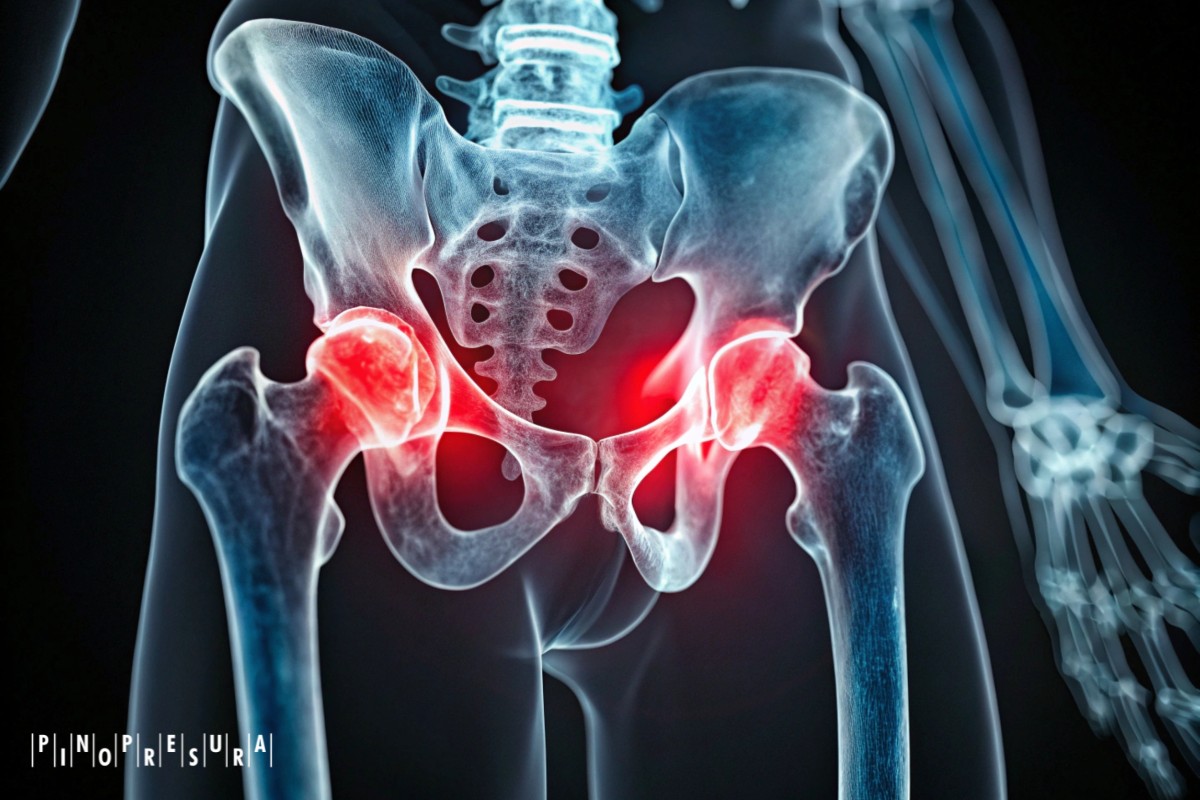
When it comes to hip pain, points along the greater ileum, on the iliopsoas bands, gluteal attachments and in the region of the sacroiliac ligament are important. It is often these points, rather than the hip joint itself, that generate the discomfort.
After just one well-conducted session pinopressure The patient may notice a greater range of movement. After three visits, the hip pain usually disappears and the gait becomes light and natural.
Checklist: 5 steps to reduce treatment time
- Movement analysis instead of guesswork.
Before you touch, observe. How the patient stands, how he puts weight on his legs, which way he positions his pelvis. Sometimes you only have to look to see that one side is running like a spare engine - on standby all the time. - Work on the sequence, not on the pain point.
Pinopressure teaches that the tissue is a network. If the gluteus medius is blocked, also relax the ileus area, the broad fascia and the piriformis muscle. Only then will the body „understand” that it can let go. - Breathing as the key to resetting tension.
During therapy, ask the patient to breathe calmly. Inhale - exhale - pause. Each breath supports the nervous system in processing stimuli. Much of the tension around the hip is rooted in stress and a contracted diaphragm. - Movement after therapy - just the right amount.
Don't make the patient do 20 exercises from YouTube. One or two tasks that maintain the new movement pattern are enough. Too much stimulus after treatment can undo the effect. - Education - let the patient know what is happening.
If he understands why he may feel „broken” or momentary discomfort after therapy, he will not panic and interrupt the process. Knowledge lowers tension and nervous calm is half the battle.
Case study: effect after 3 visits
Mrs Anna, 46 years old, hip pain on the outer side for several months. Imaging tests - clear. Physiotherapy, massages, stretching - short term improvement.Already at the first visit it is apparent that the pelvis is slightly twisted, and with every step the medial buttock reacts with defensive tension. First pinopressure session: points near the ileum, the iliac tibialis fascia, then work on the iliac-lumbar ligament.
After three days, the patient calls to say that she was finally able to walk a longer distance without a „pulling” feeling.Second visit - refining the sequence, adding work on the gluteus maximus and a short activation exercise.Third - just consolidating the effect. Patient pain free, full range of flexion and rotation.
There are many such cases. And it is not about the miraculous touch. It is about logic. Pinopressure allows you to „talk” to the nervous system in its language - the language of stimuli.
A hip that „wants” to move again
Hip pain does not always require complex diagnostic imaging or months of exercise. Sometimes the body just needs a precise „click” - a pulse to remind it how to work in balance.Pinopressure provides just that - the ability to restore harmony in a few movements. For the patient, this is often a relief; for the therapist, the satisfaction that the body has started to cooperate again.
If you feel your hip is living a life of its own, don't wait for the problem to resolve itself. Three sessions can bring relief and procrastination only makes things worse. Sometimes a little work is all it takes to restore the fitness and lightness our bodies deserve.
FAQ
If the pain intensifies with a particular movement, but subsides after relaxation and a warm bath - it is most likely the muscles. If, on the other hand, the pain does not respond to a warm-up but occurs with loading, it is worth checking the joint. Well-run functional diagnostics can tell the difference in a few minutes.
It's not a replacement, just an alternative. Both methods work through mechanical stimuli, but pinopressure does not disturb the skin, so it is safer for people with contraindications to needles. In addition, it allows you to work more dynamically - the therapist is in constant contact with the tissue and can see its reaction.
Optimally 4-6 days. This is how long the body needs to process the stimulus and rebuild the correct tension pattern. More frequent sessions do not give better results - they may even overload the nervous system.
This is normal. Sometimes, after the first therapy, there is a feeling of tenderness or fatigue in the muscles - like after an intense workout. This is a sign that the body has started the process of regulating tension. Symptoms should subside within 24-48 hours. If the pain intensifies, it is worth contacting a therapist and checking the tissue response.