
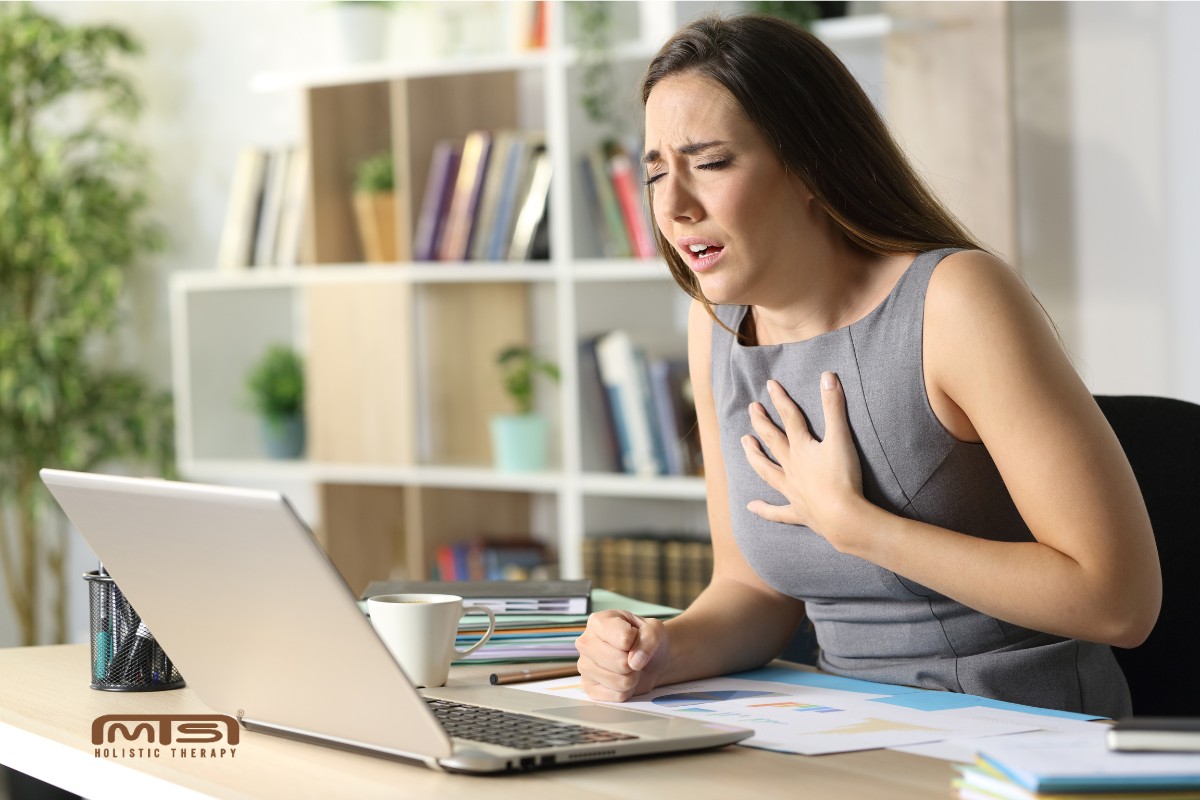
Shortness of breath, a feeling of shortness of breath, rapid and shallow breathing - for many people this is a familiar scenario in moments of intense tension. Stress can set off reactions in the body that do not always pass after a few minutes. Some people feel their breathing is 'blocked' and their chest tight as a vice. Can such breathing difficulties be alleviated through physiotherapy?
How does stress affect breathing patterns?
Under stress, the body goes into 'fight or flight' mode. The heart beats faster and breathing becomes shallower and accelerated. This is the body's natural response, but when tension becomes chronic, this way of breathing becomes fixed. We breathe mainly through the upper chest instead of using the diaphragm. The result? The tension in the muscles of the neck, shoulders and chest increases, and breathing difficulties are exacerbated even at rest.
In the long term, this leads to a vicious circle: stress - shallow breathing - feeling breathless - even more stress. Many patients then report a fear of heart disease or asthma, while the root of the problem lies in the mechanics of breathing.
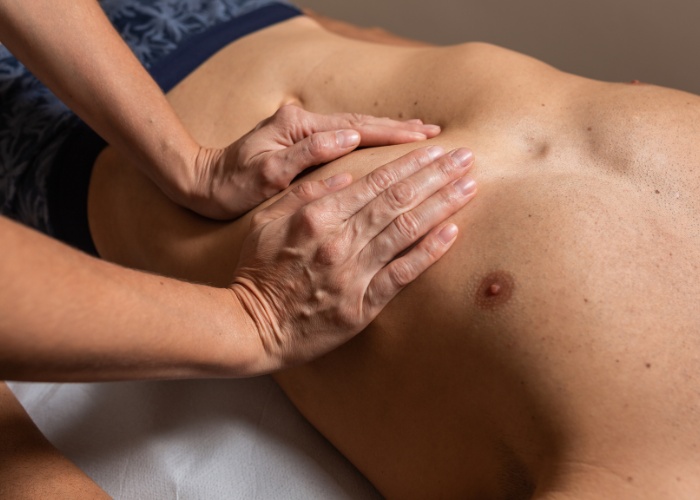
Visceral therapy is a method of manual work that improves the mobility of internal organs, reduces tension in the diaphragm and abdominal cavity, promotes free breathing and reduces stress-related breathing difficulties.
Role of the diaphragm and nervous system
The diaphragm is the main respiratory muscle, but also a kind of 'link' between the body and the nervous system. Its tension affects the abdominal organs, the spine and posture. When we breathe diaphragmatically, we activate the vagus nerve, which inhibits the stress response.
The problem arises when the diaphragm stops working freely. Under the influence of chronic tension, poor posture or a sedentary lifestyle, the diaphragm becomes stiff and does not move to its full extent. The chest and accessory muscles then take over the breathing. This is what the patient experiences as difficulty breathing, even though the lungs and heart are healthy.
At this point, the physiotherapist can act very specifically - through manual work, exercises and respiratory re-education.
Breathing difficulties - what does the physiotherapist examine and how does he support?
During the visit, the physiotherapist analyses breathing patterns: whether the patient is activating the diaphragm or rather 'pumping' the top of the chest. The assessment also includes rib mobility, abdominal and back muscle tension and even pelvic alignment.
If there are stress-related breathing difficulties, the physiotherapist may use:
- manual techniques to relax the diaphragm and chest muscles,
- mobilisation of the ribs and thoracic spine,
- breathing re-education exercises that teach the patient to return to a natural, calm rhythm.
Often, after just a few sessions, patients report that breathing becomes deeper and tension in the sternum and throat area disappears.

Psychosomatic disorders occur when stress and mental tension take their toll on the body. They can give symptoms such as breathlessness, tightness in the chest, abdominal pain or chronic muscle tension. These are real ailments that originate in the emotions and not in organ disease.
Exercises, techniques and therapy effects
Difficulty breathing when stressed is often due to the body tensing up and losing its natural rhythm. However, this can be gradually reversed by learning simple habits and exercises. Where should you start to regain free breathing?
- Learning diaphragmatic breathing
The patient lies or sits with the hand resting on the abdomen. Task - feel the abdomen rising on inhalation and falling on exhalation. - Relaxation of accessory muscles
Manual techniques and stretching exercises for the neck, shoulders and upper chest. - Mobilisation of the ribs and thoracic spine
It improves the flexibility of the chest, which facilitates fuller breathing. - Exercises with breathing control under load
Introduced in functional positions - e.g. during squatting or walking, so that the breathing automatically becomes correct also in movement. - Education and prevention
The patient learns how to recognise the first signs of stress and how to quickly restore a calm breathing rhythm to prevent breathing difficulties from escalating again.
FAQ
Not always. If pulmonary and cardiovascular examinations are normal, the source of the problem often lies in muscle tension and diaphragmatic dysfunction.
Often the first changes appear after just 2-3 visits, although it takes several weeks of practice to consolidate a new breathing pattern.
Yes, most breathing techniques can be done daily. A physiotherapist will show you how to do them correctly.
Not everyone reacts in the same way. For some it manifests itself as an accelerated heart rate, for others as abdominal pain. But for many people, it is the breathing that becomes the 'weak point'.
No. Physiotherapy works on the body and breathing mechanics. If the stress is chronic, it is also worth considering the support of a psychologist to act holistically.