

More and more patients are coming forward for help with bruxism therapy. It is a difficulty faced in particular by people who are exposed to a life of constant running, a large number of duties at work and who do not find a way to relieve stress. Fortunately, we already have many effective ways to combat this condition. The treatment of bruxism is often the result of a combination of several therapies. Read more!
What is bruxism?
Not everyone knows what bruxism even is. We refer to it when we habitually and unconsciously clench our teeth, which we gnash at the same time. It is the result of an unusually strong muscle tensions masseters, which press the mandibular teeth too hard against the maxillary teeth. An unpleasant sound is not the only downside to such a stress response. With prolonged bruxism, a problem can arise in the form of pain, and it is not uncommon for teeth to be damaged. It is worth noting here that sometimes we are not aware of the problem, as bruxism often occurs during sleep. Confirmation of a bruxism problem can be established, among other things, by the dentist during a standard visit, which is why regular check-ups are so important.
Causes of bruxism
The causes of bruxism are varied and can include both psychological and physical factors. Among the most common causes are stress and anxiety, which lead to excessive muscle tension, including the jaw muscles. People experiencing chronic stress or emotional strain often unconsciously clench their teeth, especially at night, which is one of the main causes of bruxism. Other factors include sleep disorders, such as sleep apnoea, and hormonal changes, for example during pregnancy or menopause. In addition, bruxism can result from dental abnormalities. Such as ill-fitting dentures, fillings or bite irregularities that force the jaw to move unnaturally. Often bruxism is also associated with neurological diseases, such as Parkinson's disease, as well as with the intake of certain medications, especially those affecting the nervous system.
Bruxism and the temporomandibular joint
The temporomandibular joint (TMJ) plays a key role in the proper function of the jaw, enabling the movements needed for speaking, eating and expressing emotions. Bruxism, especially that occurring as a result of chronic teeth clenching, can lead to overloading of this joint, resulting in various health problems. Overloading of the temporomandibular joint leads to inflammation, pain and reduced mobility of the jaw. Prolonged grinding of the teeth not only causes excessive tension in the jaw muscles, but also micro-traumas within the joint, which can lead to so-called clicks, snaps or locking of the joint.
As a result of overloading the temporomandibular joint, pain in the temple area, neck area and headaches, especially in the morning, can also occur. In addition, people with bruxism often develop symptoms such as a feeling of stiffness in the facial area, difficulty opening the mouth or even toothaches. Too much tension in the joint can lead to the development of conditions such as temporomandibular joint dysfunction (TMD), which requires appropriate treatment, including manual therapy, the use of relaxation splints or pharmacotherapy.
Treatment of bruxism
As noted, the best results in the treatment of bruxism are obtained with the use of comprehensive solutions. It is worth targeting:
- dentist,
- psychotherapist,
- neurologist,
- physiotherapist.
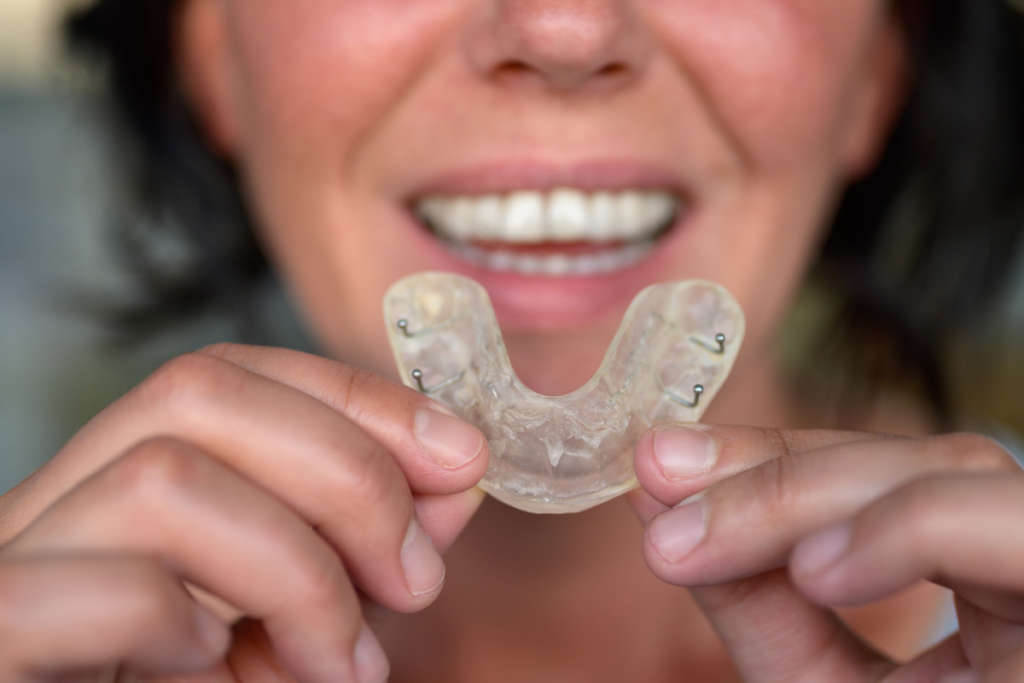
Relaxation splinting is one of the most effective treatments for bruxism. Particularly in cases where the problem is nightly teeth clenching or grinding. It is a specially designed device that is placed over the teeth to minimise contact and protect against damage from excessive pressure. The splint helps to relax the jaw muscles, reducing the tension and pain associated with bruxism. Additionally, by improving occlusion, the splint can reduce strain on the temporomandibular joint, relieving symptoms such as headaches and facial pain. Regular use of the relaxation splint, especially at night, is an effective form of treatment that helps to reduce bruxism symptoms in the long term.
Impact of physiotherapy on the treatment of bruxism
The physiotherapist has a special role in dealing with bruxism. It is his or her task that is most crucial in treatment of such conditions. The treatment of bruxism through physiotherapy involves placing emphasis on deactivating the hypersensitive trigger points. What's more, the specialist will also advise a range of exercises to perform on your own, which enable you to actively relax your muscles. The physiotherapist will also show us a variety of relaxation techniques neuromuscular treatment, which is helpful in the treatment of bruxism. A visit to the specialist begins with an interview to discover the cause of the condition. Following the history, the specialist will assess the patient's range of movement and select an individualised treatment programme, which should help to effectively address the problem and reduce pain.



