
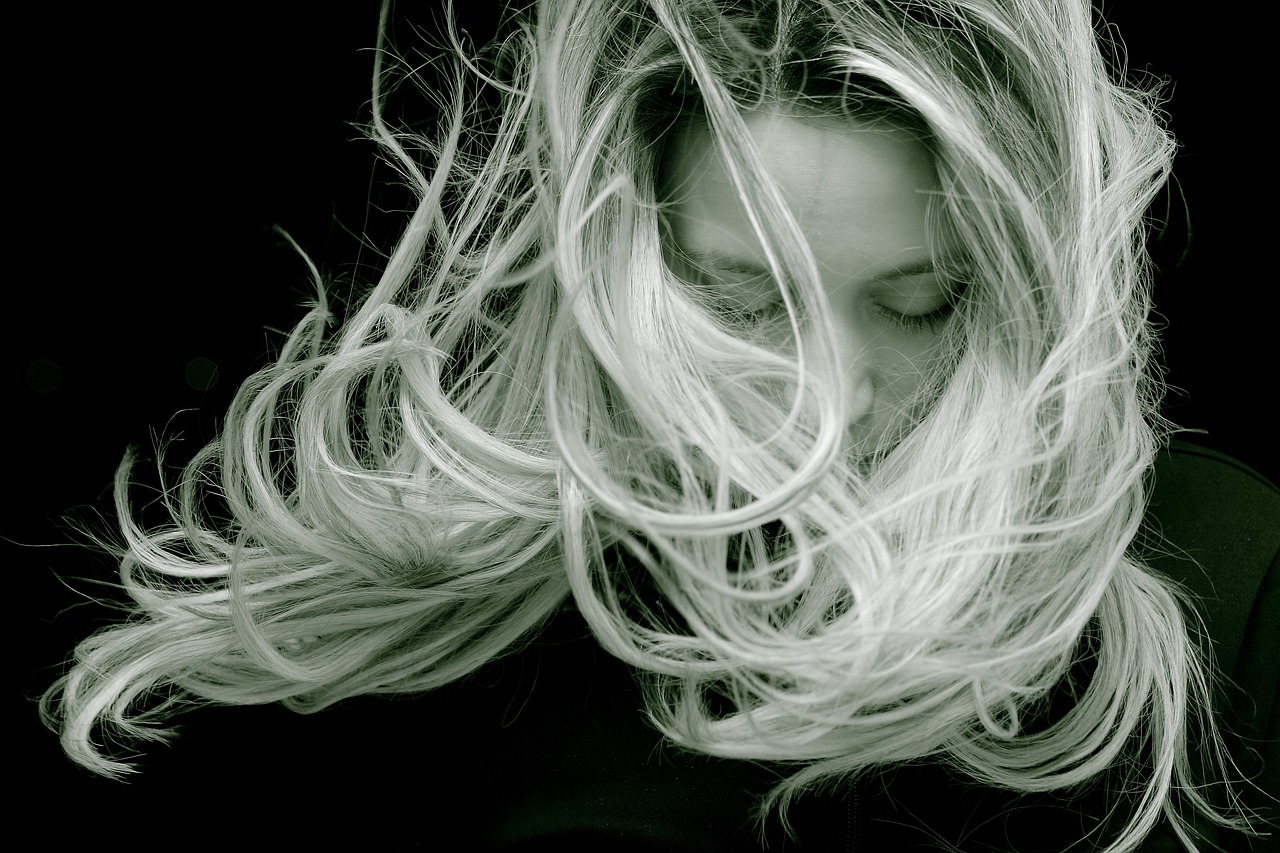
Today, porosity is considered one of the most important criteria for classifying hair. Determining the degree of porosity helps in finding the right care methods. This is because the choice of the right products for washing, conditioning and styling depends to a large extent on the distribution of the hair scales and their separation.
What is porosity?
The porosity of hair is determined by the angle of deviation of its scales from the cortex. The level of deviation makes it possible to distinguish between three types of hair:
- low-porous,
- medium-porous
- highly porous.
Low-porous hair
Low-porous hair has scales tightly attached to the cortex. They are very resistant to damage and hair treatments and styling. Such hair is healthy, smooth and shiny, requires little maintenance and is easy to weigh down. Most straight hair has low porosity. If you get the nutrients wrong, they will settle on the surface and make your hair lose its bounce, vitality and natural shine. Low-porous hair can be treated with oils such as coconut, peanut, flax, castor or sunflower.
Medium porous hair
Medium-porous hair is the most common hair type. It has both the characteristics of high porosity and low porosity hair. They are fairly easy to style, reasonably smooth and the best oils to care for them are oils such as plum, grape or camellia. Medium-porosity hair doesn't cause much of a problem, but can be frizzy.
High porosity of hair
The most common cause of high-porosity hair is damage caused by inappropriate or too frequent hairdressing treatments, insufficient protection or inadequate care. Highly porous hair can also be caused by nature. These have an irregularly distributed cuticle, which stands out strongly from the hair cortex. This causes them to react extremely quickly to changes in temperature and humidity.
As a rule, curly hair is highly porous, as it has naturally deviated scales from the cortex. They reflect light less well, appear dull and are often rough, due to the low moisture content deep within the hair. They are very sensitive and easily damaged. Their undoubted advantage, however, is that they are highly amenable to styling, colouring and other hairdressing treatments. However, they easily become brittle, breakable and will split at the ends.
Hair often becomes porous as a result of bleaching or perming. This is because the products used for such treatments have an alkaline pH. This damages the hair's structure, opening or chipping the hair's cuticles and creating fissures.
When touching strands of highly porous hair, you can easily feel the unevenness under your fingers. They are also often damaged, dull, dry and frizzy. It is advisable to use oils with large molecules to fill in the gaps between the scales, such as jojoba, avocado, apple kernel or wheat germ oils.

How do you test the porosity of your hair?
The porosity of the hair is easily tested using a very simple test. All you need is a glass filled with water. Place one hair on the surface of the water and wait five minutes. If it sinks to the bottom, this indicates very open scales and high porosity. If it sinks to about halfway down the glass, then the hair is medium-porous, and if it floats on the surface of the water, this indicates tightly adhered scales and low-porosity hair.
How do I look after my high porous hair?
Sometimes, however, theoretical knowledge of porosity alone will not help and our hair will continue to suffer from care mistakes. These can ultimately result in irritation and itching of the scalp, oily skin or dandruff. It may then be necessary to trichologist.
However, usually with well-chosen hair care products, we can improve the condition of the hair and effectively reduce its excessively porous structure. Such hair should be moisturised and lubricated frequently. Emollients and oils with large molecules also work well for them. Wet oiling because it is a simple and proven way to improve the condition of highly porous hair.



