

Feet are one of the most overlooked parts of our body, despite the fact that they play a huge role in our daily functioning. Most of the time, we are not aware of their condition until they start to develop pain, problems walking or deformities. In such situations, it is worth turning to modern diagnostic methodswhich allow the early detection of possible problems. One such method is the computerised foot examination, which allows a precise assessment of the health of our feet and their biomechanics.
What is this study about?
The computerised foot examination is a modern diagnostic method that allows an accurate assessment of foot health and analysis of foot function. Using advanced technology, this examination provides precise results on foot pressure distribution, foot biomechanics and any possible abnormalities. This is particularly important for people who are struggling with foot problems such as flat feet, hallux valgus or joint pain. Thanks to this examination, it is possible to develop an individual treatment or rehabilitation plan, thereby improving the patient's quality of life.
What does a computerised foot examination look like?
Procedure is completely safe, painless and quick. The patient places his or her feet on a special platform equipped with sensors that record the distribution of pressure while standing or walking. The collected data is then processed by a computer, which analyses it for any abnormalities in the gait and standing pattern. This allows the specialist to pinpoint the exact areas of the foot that are under excessive pressure, which can lead to various ailments. Such as back pain, knee pain or ankle pain.
In addition, the examination makes it possible to detect problems with the biomechanics of the feet, such as misalignment of the toes, abnormalities in the foot arch or asymmetries in weight distribution. This information is extremely important in diagnosing conditions such as flat feet, clubfoot, hallux valgus, as well as in the process of fitting appropriate orthotics.
Computerised foot examination - is it worth doing?
Many of us do not realise how important our feet are in our daily functioning. They are the foundation of the entire body, taking the brunt of our weight when walking, running and even standing. Problems with the feet can lead to a range of ailments not only in the feet themselves, but also in other parts of the body, such as the knee joints, hip joints and even the spine.
A computerised foot examination allows early detection of problems before they become a serious impediment to daily life. With regular check-ups, the health of the feet can be monitored so that appropriate treatment measures can be taken more quickly. Often, preventing problems is much easier and less costly than treating them at an advanced stage.
When should you use the study?
A computerised foot examination is recommended in a number of cases, especially when any musculoskeletal complaints are present. It is worth considering this examination if:
- you experience pain in your feet, joints or back;
- you feel like you are walking unevenly or have balance problems;
- you feel your foot is "uncomfortable" or misaligned;
- you have noticed foot deformities such as hallux valgus, hammer toes or flat feet;
- you are an athlete and want to take care of the correct biomechanics of your feet to prevent injuries;
- you have problems choosing the right footwear.
A computerised foot examination can also be helpful in prevention and prophylaxis, for example for older people who are at risk of falls due to impaired balance or gait disturbances.
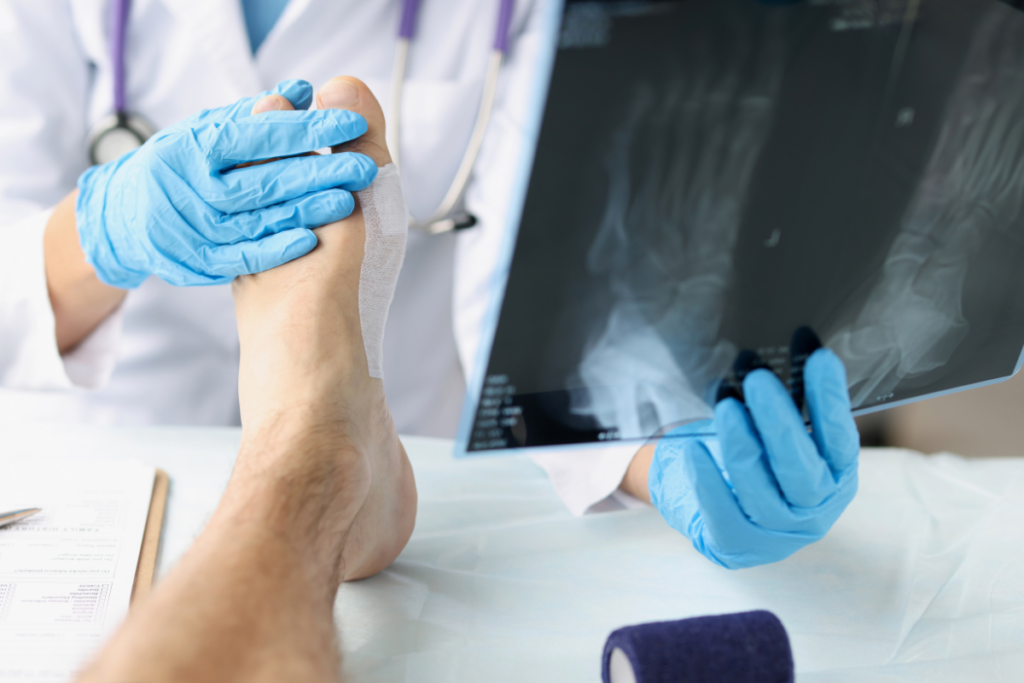
Computerised foot examination - benefits
It enables early diagnosis of problems that might go unnoticed during a traditional visit to a specialist. Thanks to the precise results, abnormalities can be identified quickly, allowing action to be taken before they become a serious handicap. Based on the results of the examination, the doctor can propose an individualised treatment approach, such as the selection of suitable orthotics or recommendations for rehabilitation exercises. In addition, a computerised foot examination is particularly useful for physically active people, as it helps to improve gait biomechanics, which reduces the risk of injury. Ultimately, foot diagnostics improves quality of life by eliminating or alleviating discomfort, resulting in greater comfort in daily functioning and during physical activity.



