

Every runner knows that feeling when, instead of satisfaction from training, there is pain on the outside of the knee. Seemingly a small thing, but it can rule you out of your running plans for weeks. The patellofemoral band syndrome is one of the most common strain problems in regular runners. Physiotherapy for runners in such situations offers a real chance of a quick return to form - but only if the therapy is well chosen. So how do we approach this subject so that we don't end up with a perpetual 'rest from running'?
What is the patellofemoral band?
The patellofemoral band is a thick connective tissue band that runs from the hip to the lateral aspect of the knee. Its role is simple: it stabilises the thigh and knee during movement. In a healthy person, it acts as a strong belt that holds the whole thing in place. The problem arises when it starts to rub against the lateral part of the femur. This friction, repeated thousands of times during running, leads to micro-injury, inflammation and ultimately pain, which can effectively spoil the pleasure of training.
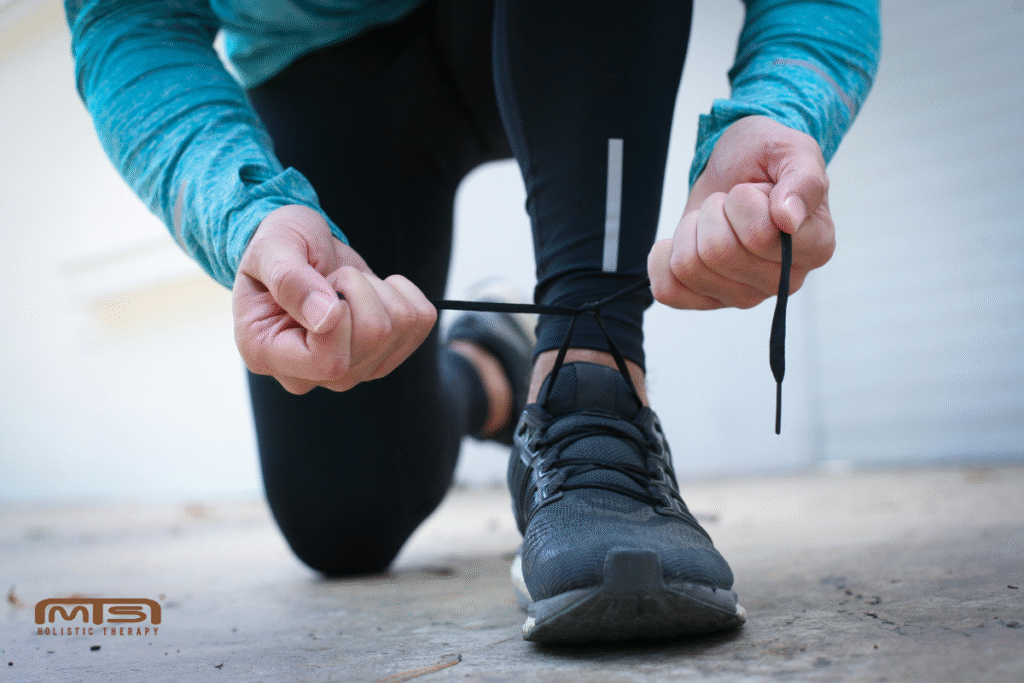
In the programme MTS4RUN Physiotherapy for runners includes an individualised approach to the patellofemoral band syndrome - focusing on reducing pain, improving hip stabilisation and restoring correct running technique, which significantly reduces the time to return to full training loads.
What symptoms does its overload produce?
The most characteristic symptom is pain on the outside of the knee, exacerbated by running downhill and with prolonged running on hard ground. Typical symptoms include:
- discomfort that initially appears only after a few kilometres,
- increasing discomfort after just a few minutes of running at a more advanced stage,
- pain present even during everyday activities, such as climbing stairs,
- a stinging or burning sensation that forces you to stop training.
If left untreated, overload can lead to chronic conditions that prevent normal running. Therefore, a quick response and well-managed physiotherapy for runners is an absolute necessity.
Physiotherapy for runners - which methods produce the best results?
In the treatment of patellofemoral band syndrome, there is no single magic cure. Usually, a combination of rest, manual therapy, exercise and modern tissue regeneration methods are used. The most important exercises are stretching and strengthening of the gluteal muscles and hip stabilisers. This reduces band tension and improves running biomechanics. Therapies that promote tissue healing, such as shock wave and electrotherapy, are also increasingly being used. However, whatever technique is chosen, the most important thing is the individual approach - physiotherapy for runners must not be a copying of patterns, but must take into account running style, running surface and training loads.
The role of manual therapy, EPTE and individualisation
Manual therapy can reduce muscle tension, improve flexibility and mobilise tissues for regeneration. In the hands of an experienced therapist, it is often the first step to rapid improvement. EPTE, or transcutaneous therapeutic electrolysis, is a modern and effective method - it involves inserting a thin needle directly into the damaged tissue and applying a low-intensity current. This speeds up the healing process and reduces inflammation. For many runners, it is a lifesaver when classic methods fail. However, no technique will work unless it is tailored to the individual person. Runner physiotherapy is the art of combining tools in such a way that they work on the cause of the problem and not just the symptoms.
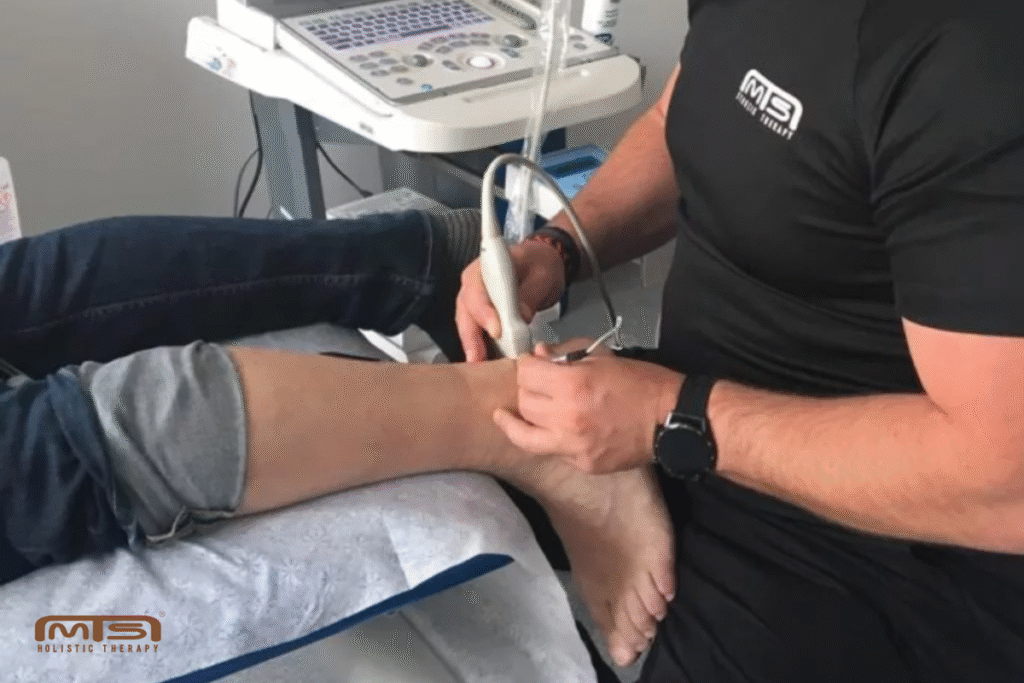
Percutaneous electrolysis EPTE is a state-of-the-art method that reduces inflammation and pain in the patellofemoral band, promoting a faster return to training for runners.
Physiotherapy for runners and return to training
Getting back to running after an injury requires patience. Increasing the load too quickly usually ends in a recurrence of pain. That's why physiotherapy for runners doesn't stop at eliminating symptoms - it also includes learning the correct technique, selecting preventive exercises and a plan for a gradual return to training. Running in water, cycling or weight training are great options to keep in shape without overloading the band. This makes it easier to get back on track without the risk of repeating mistakes.
FAQ
Not always. Early physiotherapy for runners often allows for a rapid quieting of symptoms and a gradual return to training.
No. Stretching helps, but strengthening the gluteal muscles and working on hip stabilisation are also fundamental.
If the pain is mild and only occurs towards the end of training - sometimes yes. But ignoring severe discomfort is a straight road to a chronic problem.
Usually a few weeks of regular work. For some runners, improvement comes quickly, for others it takes longer - it depends on the severity of the strain and the commitment to therapy.
Yes, but on the condition that you change not only your training plan, but also your running technique. Physiotherapy produces lasting results when the runner cooperates and implements the recommendations consistently.



