
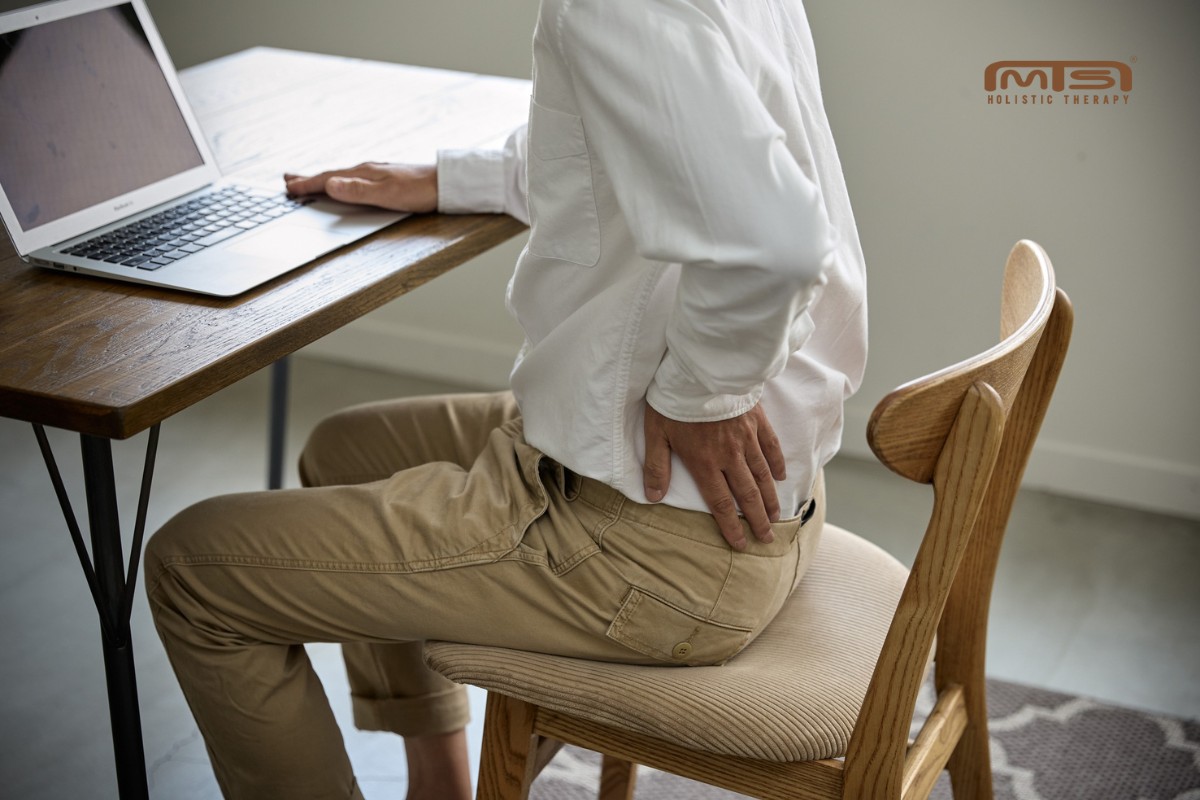
Discomfort in the perineal area is a topic that few people like to talk about. The feeling of tension, burning, tightness or a deafening pain can be frustrating and incomprehensible, especially if urological and laboratory tests show no abnormalities. Many men function with this ailment for years, not knowing that perineal tension in men can have a functional basis and be effectively treated with physiotherapy. What can increase tension in this region and when is it worth going to a movement specialist rather than medication?
What could be the causes of perineal tension?
Perineal tension in men can be the result of a number of related factors. One of the most common is chronic stress and the associated increased activation of the autonomic nervous system. In other words, the body remains in 'fight or flight' mode even when there is no real threat. The pelvic floor muscles - often unconsciously - tighten, leading to painful trigger points and restricted mobility.
Other causes include:
- diaphragmatic and respiratory disorders (e.g. shallow thoracic breathing)
- sports overloads (cycling, powerlifting)
- history of abdominal, prostate or rectal surgery
- chronic constipation or difficulties with micturition
- lack of awareness and control of pelvic floor muscles
All of these factors can cause or sustain tension in the perineal area and their treatment requires a broader view than just pharmacotherapy.
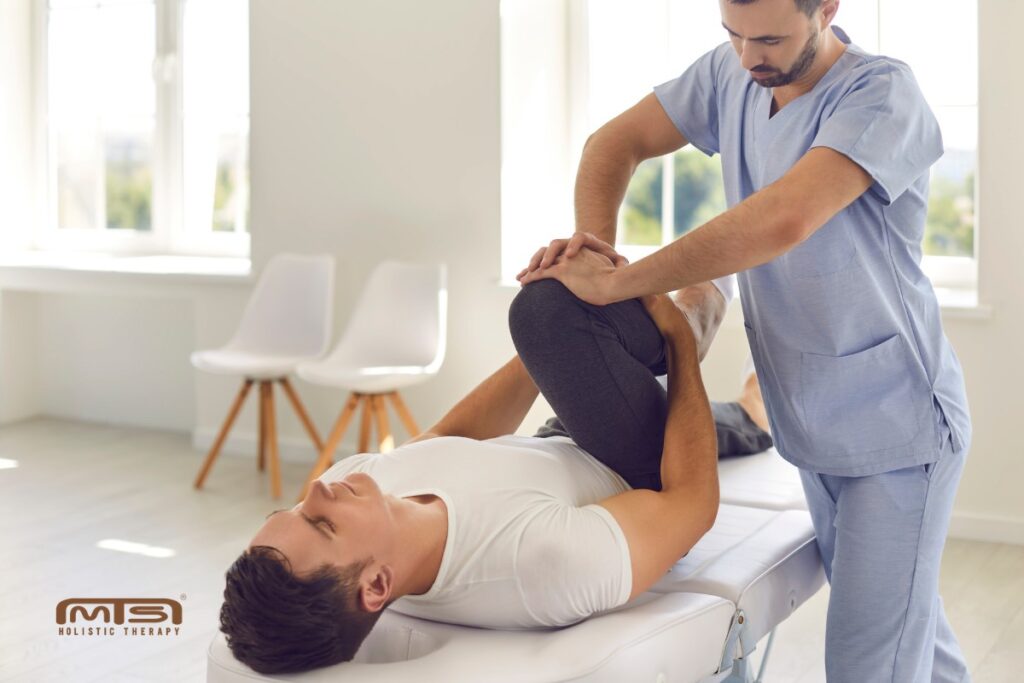
Urogynaecological physiotherapy is an effective method that reduces perineal tension in men, improves pelvic floor muscle function and promotes a return to activity.
Perineal tension in men - when is it worth consulting a physiotherapist?
If you feel:
- a tightening or "balling" sensation in the perineum
- pain while sitting
- discomfort during micturition or after ejaculation
- pain radiating to the groin, buttocks or thighs
- a feeling of tension without an identifiable medical cause
...then a physiotherapist specialising in urogynaecology and functional therapy may prove to be the missing link in diagnosis and treatment.
There is no need to wait until the complaints prevent normal functioning. The earlier the tension pattern and its causes are recognised, the more effective and quicker the therapy.
What does the examination and therapy look like?
To work out perineal tension in men, a physiotherapist needs to examine more than just the symptom itself. The whole background counts - from breathing to posture. Here is what the process usually looks like:
- History and analysis of symptoms
The specialist will ask about the nature of perineal tension in men, the circumstances of its occurrence, lifestyle, past operations, stress levels and physical activity. - Assessment of posture and movement patterns
Checking that misalignment of the pelvis, spine or feet does not contribute to overload in the perineal area. - Palpation and transrectal examination (with patient consent)
It allows the tension and symmetry of the pelvic floor muscles to be assessed. Many tensions are deeply hidden and direct contact allows them to be precisely located. - Manual and visceral therapy
Relaxation techniques, tissue mobilisations, working on fascias and abdominal organs - all with the aim of reducing tension and restoring mobility. - Breathing and functional exercises
Learning the correct breathing track, activation and relaxation of the pelvic floor muscles, combining their work with movement and daily activities.
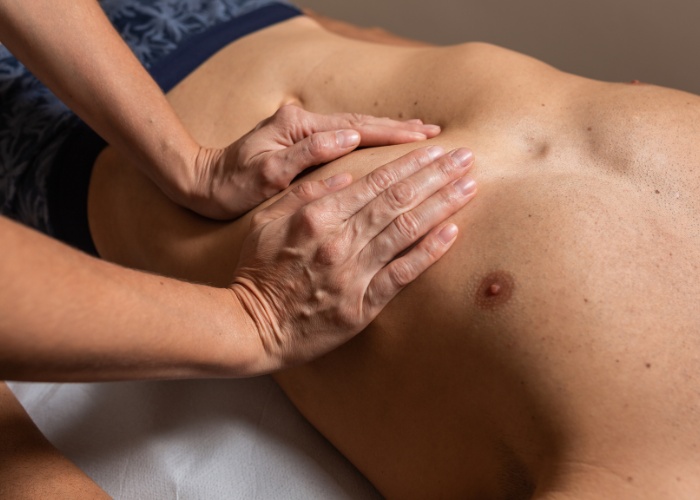
Visceral therapy is a precise method that reduces visceral tension, improves the mobility of the internal organs and supports the proper functioning of the entire body.
Perineal tension in men - the role of visceral and urogynaecological therapy
Perineal tension in men is often not a local problem, but the result of wider dysfunctions in the trunk. Visceral therapy involves working with the internal organs and their suspensions - for example, bowel, bladder or prostate tension can affect the pelvic floor muscles. On the other hand, urogynaecological therapy (which is also used for men!) allows abnormal tension patterns in these muscles to be recognised and broken down.
The combination of both approaches has a comprehensive effect: it improves tissue mobility, reduces pain and allows you to regain full function in your daily life.
FAQ
Zdarza się, ale często problem narasta z czasem. Lepiej nie czekać, tylko zareagować wcześniej.
Nie musi być. Może być chwilowo niekomfortowa, ale dobry terapeuta dostosowuje intensywność do pacjenta.
Do pełnej oceny czasem konieczne jest badanie przezodbytnicze, ale odbywa się to zawsze za zgodą i z zachowaniem komfortu pacjenta.
U wielu pacjentów poprawa pojawia się już po kilku spotkaniach, ale wszystko zależy od przyczyny napięcia.
Nie, ale może być jego uzupełnieniem albo alternatywą, gdy brak jest zmian w badaniach obrazowych czy laboratoryjnych.



