
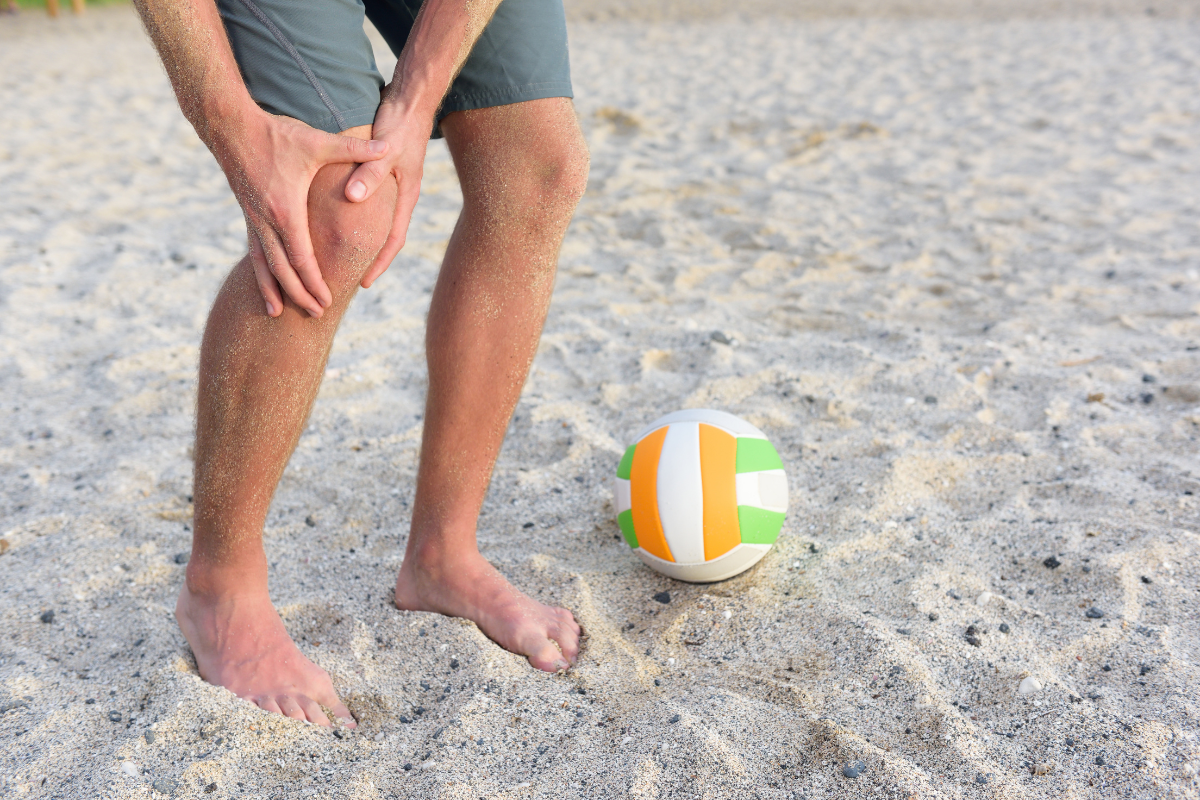
Jumper's knee is the colloquial name used to refer to degenerative changes in the ligament of the patella. The lesions are located particularly in the area where it attaches directly to the top of the patella. It is a condition in the enthesopathy group, characterised by degeneration of the ligament fibres in an overloaded area, often as a result of superimposed micro-injuries to this structure. Don't let this condition restrict you from playing your favourite sport, whether you are a basketball, volleyball or other active athlete. There are effective methods of treating and preventing this type of strain, which you will learn about later in this article. Read more!
Jumper's knee - what symptoms does it give?
Discomfort associated with progressive changes in the jumper's knee often increases during physical activity. The main reason for this is that the joint is subjected to a lot of stress. In the advanced stage of the condition, pain associated with jumper's knee can occur even during seemingly undemanding activities such as sitting or lying down. Characteristically, the pain is concentrated under the patella and increases when climbing stairs or walking in the mountains, especially when descending. The pain is also evident during sports. Mainly in sports that require jumping, such as basketball, volleyball or football. The characteristic symptom of jumper's knee is pain and tenderness in the area of the patellar ligament, located at the front of the knee. The sensation of pain increases during and after exercise, especially during jumping and running, and can lead to limping. In some cases, the painful area may become swollen.
Jumper's knee - is it a common ailment?

Depending on the sport, it is estimated that up to one in ten athletes, may experience problems with their jumper's knee. The situation is far more common among those starting out in sport. It is also worth noting that this phenomenon occurs more frequently in men, as much as twice as often as in women. There are two main causes for the development of changes in the patella area. One is overtraining associated with chronic loading of the ligament. The other is a return to activity after an interval without adequate preparation, which can lead to pain and overload of the area.
Jumper's knee most commonly occurs during the spring months, when many people choose to resume physical activity after a less intense winter period. This condition mainly affects men between the ages of 25 and 40, often with extra pounds. It is worth noting that each excess kilogram, especially after a period of less winter activity, increases the stress on the knees during jumping. In addition, jumper's knee can be genetic, related to hypermobility or occur in the context of ankle or hip problems.
What tests should be carried out?
Making a diagnosis undoubtedly involves several steps. The first step is to identify the area in which the patient is experiencing pain, which is an important starting point. The specialist, after taking a detailed history and conducting a careful physical examination, may opt for additional imaging tests to make an accurate diagnosis.
Ultrasound (USG) is the most commonly used examination, although at the initial stage injuries may not be visible, despite the pain experienced. In some cases, doctors opt to use an X-ray (X-ray) examination, especially when the injuries are advanced and lead to calcification in the ligament area. However, despite the information that X-ray provides, it is magnetic resonance imaging (MRI) that is considered the most effective, albeit expensive, diagnostic tool. This examination provides a comprehensive picture of the structures of the knee, allowing confirmation or exclusion of the presence of other problems that may not be visible on ultrasound. This MRI allows the orthopaedic surgeon to fully assess the condition of the knee and effectively make a diagnosis.
Jumper's knee - treatment
Patella abnormalities are permanent changes that unfortunately cannot be completely rehabilitated to their pre-injury state. During treatment, the specialist focuses on several key goals.
- Strengthening the muscles surrounding the knee,
- reducing the risk of repeat damage,
- improving the capacity of the healthy part of the ligament,
- restoring full range of motion in the knee.
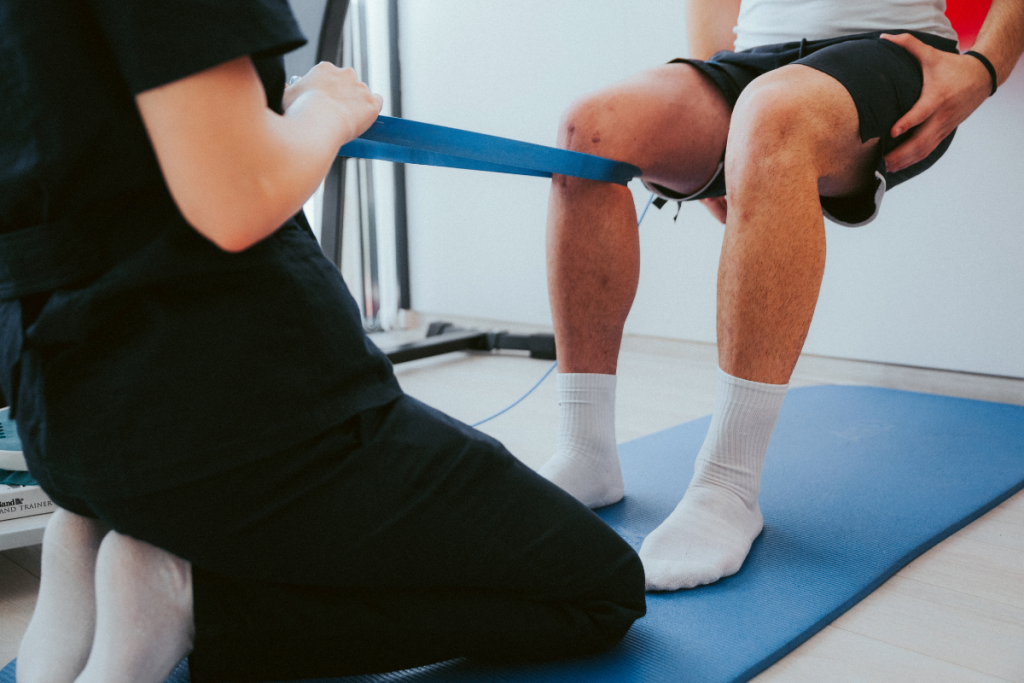
The process can take up to a year, requiring perseverance and patience from the patient. A fundamental role is played by physiotherapyThe aim is to relieve stress on the painful area, increase flexibility of the ligament, and improve muscle balance throughout the lower limb. It is also crucial to properly prepare the patient for a return to physical activity, educating them on correct exercise technique, and focusing on warming up before and stretching after training. Often, physiotherapists also suggest the use of taping, which is the precise placement of special bands in the area affected by pain.
What is our advice for jumper's knee?
Shockwave
Shockwave is one of the most effective treatments for a variety of musculoskeletal conditions, including jumper's knee problems. This innovative therapy helps to increase blood circulation in the area of injury, which stimulates faster regeneration of damaged tissues. The treatments not only reduce the level of pain experienced, but also end with a relaxing effect, bringing relief to patients. In this article, we discuss in detail the specifics of this effective method, which is a promising alternative in the treatment process of jumper's knee complaints.

Contrast cryolipolysis
During the innovative procedure contrast cryolipolysisThe body is exposed to cycles of cooling and heating. The action of the apparatus generates a thermal shock, producing a biostimulating effect. The extreme temperature changes promote faster regeneration of damaged tissues, while reducing swelling. This state-of-the-art treatment is a promising approach in the treatment of jumper's knee complaints, offering patients an effective alternative.
Game Ready topical cryotherapy
Innovative Game Ready system is a tool in the therapy of many people dealing with injuries, particularly in the context of the treatment of jumper's knee. This advanced physical therapy system is dedicated to athletes, active individuals and post-surgical patients, enabling rapid recovery from musculoskeletal injuries or post-surgical rehabilitation. Using state-of-the-art technology, Game Ready supports effective treatment methods, offering comprehensive care for the recovery process.



