
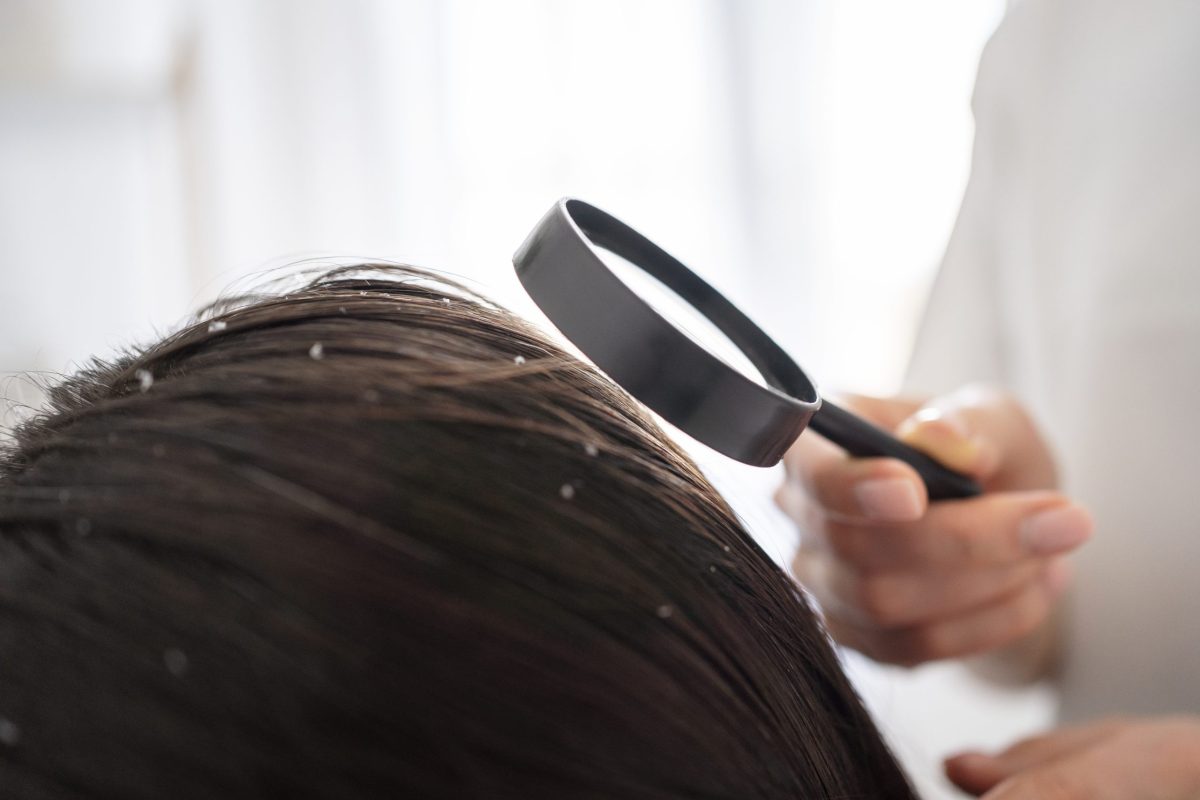
Dandruff is a condition in which the scalp flakes excessively and causes the presence of visible white flakes on the hair and arms. Causes can be fungal infections, excessive sebum production, allergies or stress. Diagnosis and treatment of dandruff is dealt with by trichologist.
Dandruff is a fairly common problem which, although not dangerous to health, can be disruptive and affect emotional wellbeing, lower self-confidence and cause complexes in some people. For this reason, they may refrain from wearing dark clothing and avoid social situations that may increase their stress. Sometimes this leads to a reduced quality of social life.
Symptoms of dandruff
Symptoms of dandruff can vary depending on the type and severity of the problem. The condition manifests primarily as white, dry scales on the scalp that often fall on the shoulders and clothes, and sometimes as an itchy, rough, red, flaky scalp.
Some people may experience greasy dandruff, in which the scalp is sticky and exudes resinous, yellow or brown scales. In particularly severe cases, dandruff may be accompanied by dangerous diseases, whereby hair loss may even occur.
Dandruff - causes of occurrence
Dandruff can have various causes. Its presence can be influenced by:
Excessive sebum production
One of the more common causes of dandruff is the excessive production of sebum by the sebaceous glands of the scalp. The excess sebum contributes to the formation of greasy dandruff.
Fungal infections
Fungi, such as Malassezia, can also be the cause of dandruff. These microorganisms are naturally found on the skin, but when they multiply too much, they cause excessive skin exfoliation leading to dandruff.
Dry skin
When the scalp is excessively dry, this is accompanied by scaling.
Allergic reactions
Dandruff can occur as a result of an allergic reaction to various substances such as shampoos, hairsprays or other products applied to the scalp.
Stress
Stress and emotional tension can also affect the condition of the scalp.
Inadequate hygiene
Improper shampooing or washing your hair too often can lead to scalp irritation and the appearance of dandruff.
It is worth remembering that each person may have individual predisposing factors for dandruff. If you have a problem with it, you should consult your doctor, a trichologist. He or she will carry out an appropriate diagnosis and recommend the right treatment.

Dandruff - how can a trichologist help treat it ?
The treatment of dandruff should be preceded by a detailed diagnosis of the scalp to identify the cause. It is then worth consulting a trichologist. He or she will be able to carry out a comprehensive assessment and propose a treatment tailored to your needs. The trichologist uses a microscope to examine the scalp or analyse skin samples. Based on the diagnosis, he or she can recommend the appropriate treatment, which usually includes:
- Prescribing appropriate methods of washing and caring for the scalp. These include regular washing of the hair with a mild shampoo, gentle combing and avoiding aggressive agents that can irritate the skin.
- Prescription of specialised anti-dandruff shampoos. These contain active ingredients such as zinc pyrithione, ketoconazole, selenium or salicylic acid. These ingredients help control excessive sebum production, reduce skin inflammation and fight possible fungal infections.
- Specific medications effective in treating this condition. In some cases, when dandruff is resistant to traditional treatments, the trichologist may recommend drug treatment and prescribe antifungals, corticosteroids or other medications to control the scalp condition.
- Light therapy, in which the scalp is exposed to special lamps or devices. These help to control skin conditions and reduce dandruff.



