

In today's world, more and more people spend most of their day sitting - in front of a computer, behind a desk, in a car. Although this seems comfortable, our bodies were not designed for prolonged immobility. According to studies, as many as 50% working in a sitting position complain of lumbar pain. Z In contrast, as many as 44% complain of ailments in the cervical spine. Often we then reach for painkillers or try to survive until the nearest massage. Did you know that there is another way - effective, safe and natural? Neck pinopressure could be just that alternative!
What exactly is a neck pinopressure?
Pinopressure is a therapeutic method that combines elements of acupressure, reflexology and neurological techniques. It uses specialised tools called pins and katas to work. Unlike classic massage or manual therapy, pinopressure works by stimulating biologically active points without disturbing the skin. Its aim is to stimulate the nervous system and improve local circulation. This action leads to a reduction in muscular tension and restoration of balance throughout the body.
Neck pinopressure is the application of this technique specifically to the neck, shoulder and upper back region. Due to the numerous innervations and complex anatomy of this area, it is one of the most frequently chosen locations for therapeutic work.
Neck pinopressure - how does it affect the cervical region?
The neck area is not only muscles, but also nerve plexuses, blood vessels and fascial structures that react strongly to stress. Long-term tension in this area causes not only pain, but also restrictions of mobility, headaches, tinnitus and even dizziness. Neck pinopressure works by mechanically irritating selected points - most often located along the spinal lines and in the occipital region.
Stimulation of these points causes a range of neurophysiological reactions - endorphins are released, blood flow improves and the sympathetic nervous system 'lets go' of tension. The result is deep relaxation, improved range of movement and - importantly - a long-lasting analgesic effect, without the need for pharmacological agents.
Release the tension hidden in your body! Find out how to visceral therapy can affect breathing, mood and better stress management.
For whom would this method be the best choice?
It is a great solution especially for people who struggle with chronic neck and shoulder tension resulting from their daily lifestyle. It is also a proven method for office workers spending long hours in front of a computer, drivers exposed to vibration and static neck strain, but also for seniors who often suffer from neck stiffness and head rotation restrictions.
In addition, pinopressure of the neck can be used for people following trauma (e.g. 'whiplash' - whiplash injury to the neck), as well as those suffering from neuralgia, migraines or tension headaches. Compared to classic massage, pinopressure works faster, deeper and without the need for intense kneading of tissues, which can sometimes be painful in more sensitive patients.
Neck pinopressure - what does the procedure look like in practice?
A neck pinopressure treatment usually lasts between 30 and 45 minutes. The patient is placed in a sitting or lying position and the therapist selects the appropriate points for stimulation based on palpation and history. Using steel pins of various shapes, a series of short strokes or compressions are applied to specific points on the skin - without causing damage to the skin. Sometimes katas - spatula-like tools - are also used to work on larger musculo-fascial areas.
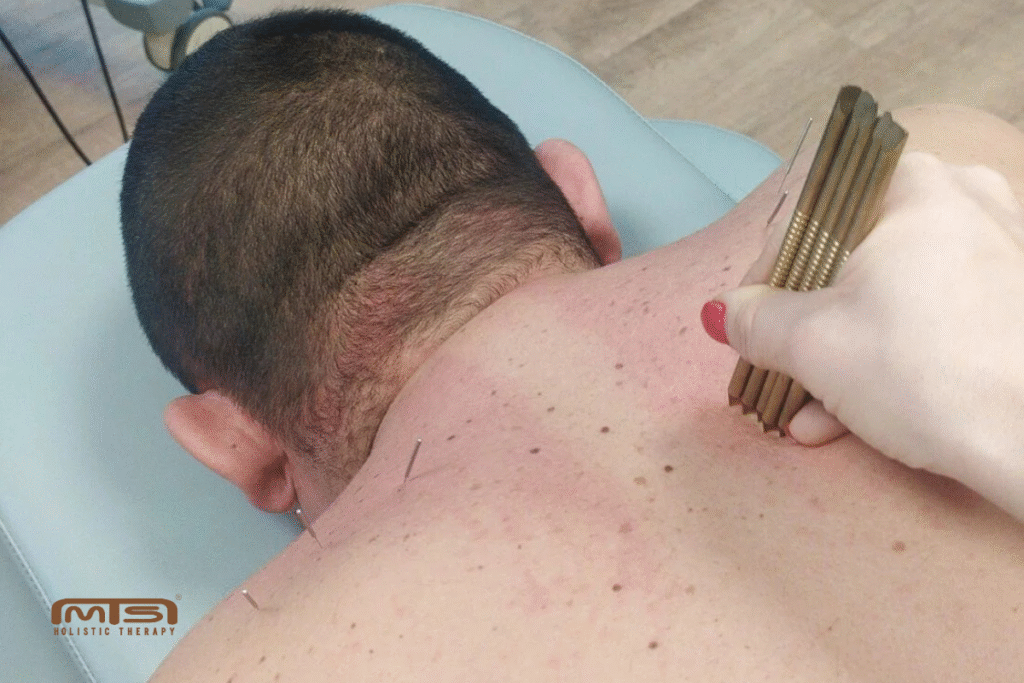
Pinopressure is a treatment with a therapeutic effect, during which the body's self-healing mechanisms are used/activated. Find out more!
Patients usually feel a pleasant warmth, a feeling of 'spilling over' relief and sometimes a slight tingling sensation. The effects can be felt after the first session - muscle relaxation, improved neck mobility and reduced pain can last for several days. In the treatment of chronic tension, a series of several appointments is recommended, preferably in combination with mobilisation and breathing exercises.
Neck pinopressure and the stress and nervous system
The effects of neck pinopressure on the nervous system cannot be overlooked, especially in the context of stress. Long-term emotional tension takes its toll on the neck - it is in this area that we accumulate the tensions of everyday life. Regular pin stimulation restores the balance between the sympathetic (responsible for 'fight and flight') and parasympathetic (responsible for regeneration) systems. This is why people struggling with insomnia, chronic fatigue or anxiety can feel an improvement after just a few treatments.



