
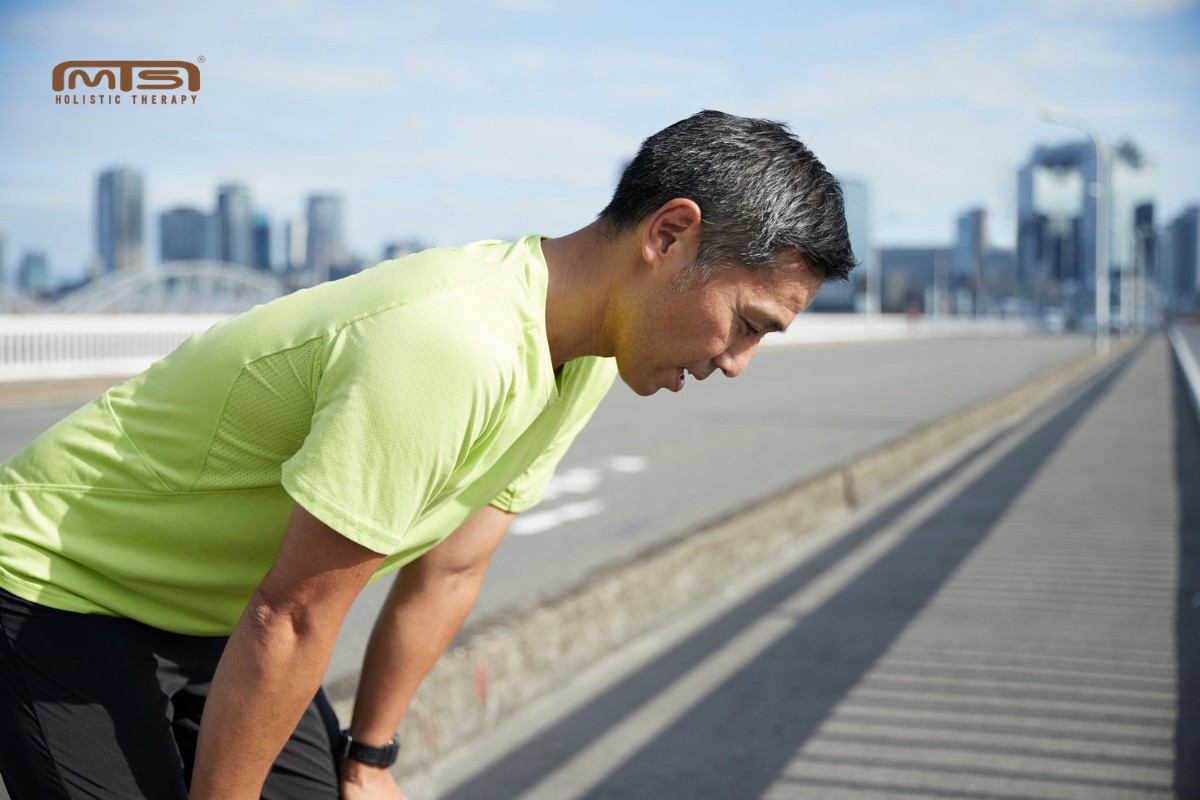
Do you feel that despite your technical progress and regular strength training, something is missing? Wondering why some exercises squeeze all the energy out of you, while others - despite a similar load - are performed with more ease and control? The answer may lie not in your muscles, but... in your breathing. Specifically: in the work of the diaphragm. Although often overlooked, this dome-shaped muscle structure in the centre of the torso determines not only performance, but above all stability and safety of movement. How does breathing in strength training affect your strength and efficiency?
Breathing in strength training - how does the diaphragm work in exercise?
The diaphragm is the main breathing muscle, but its role goes far beyond just 'taking in air'. When it works properly, it synchronises with the deep muscles of the torso - including the transversus abdominis, multifidus lumbar and pelvic floor muscles - to form the so-called cylinder of central stabilisation (core).
During inspiration, the active diaphragm lowers and increases intra-abdominal pressure, which acts as a natural belt to stabilise the spine. This increase in intra-abdominal pressure allows force to be transferred safely between the limbs and torso, which is essential for exercises such as the deadlift, squat and bench press.
Blocked or inappropriate diaphragm activity - e.g. with superficial breathing into the chest - can result in lumbar overload, poorer control of the centre of gravity and less effective movement.
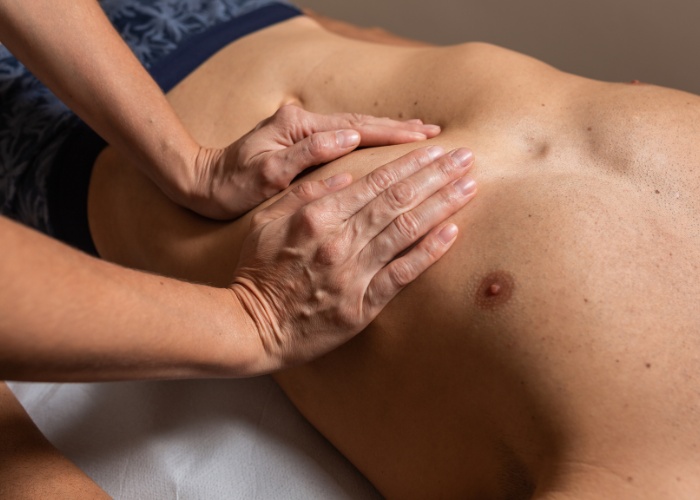
Visceral therapy - a method of manual work on the internal organs that supports the regulation of the nervous system and reduces tension in the abdominal and pelvic areas.
Why does the breath determine strength and control?
Breathing in strength training is not just an 'extra' aspect of technique. It is the foundation. Deep, diaphragmatic breathing enables you to stabilise your torso from within, rather than relying solely on tensing the external abdominal muscles or using a training belt.
Without the right breathing pattern, it is difficult to talk about effective force transfer. In practice, it goes like this: if your centre (core) is unstable, the body automatically limits the involvement of the limb muscles, protecting itself from injury. The result? Less weight, worse balance, faster fatigue.
What's more, the active work of the diaphragm supports the nervous system. Proper breathing influences muscle tone, increases proprioception and helps maintain concentration. Notice how professional weightlifters, strongmen or gymnasts breathe rhythmically and deeply - this is no accident, but a deliberate strategy to maximise efficiency.
Breathing in strength training - common mistakes.
Many practitioners - even advanced practitioners - make the same breathing mistakes without realising it. Here's how to recognise them:
- Breathing into the chest
Visible lifting of the shoulders and upper chest. This is a sign that the diaphragm is not actively working. - Holding your breath with every movement
Instead of conscious management of tension, there is a chaotic blockage of the breathing track. - Lack of synchronisation between breathing and movement
For example, failure to exhale during the phase of greatest exertion or to inhale before starting a movement. - Breathing too shallow during a series
Tissue hypoxia, loss of power, faster fatigue. - Lack of control of intra-abdominal pressure
Inability to 'inflate' the core and stabilise it.
If you notice any of the above points in yourself, it is worth taking a closer look at your breathing pattern. Breathing in strength training should be an active part of the movement, not a passive add-on.
How to improve the pattern with the help of a physiotherapist?
Integrating proper breathing with movement often requires professional observation and correction. An experienced physiotherapist or breathing coach can help you diagnose limitations in your diaphragm and teach you to activate it during exercise.
The diagnostic process often uses:
- assessment of rib and diaphragm mobility,
- functional tests (e.g. a supported breathing test),
- working with biofeedback (e.g. through video recording of breathing or tactile reference points on the torso).
MTS4RUN is a comprehensive programme for runners, combining diagnosis, therapy and training support to run pain-free and safely.
Techniques such as:
- Breathing exercises while lying down - study of diaphragm operation without gravity load,
- Exercises with resistance on the abdomen or ribs - to increase proprioception and tension control,
- Integration with functional movement - squats, deadlifts, push-ups performed with active breath management.
It is important not to treat the breath as a separate element from the movement, but as an integral part of it. It is in this synchronisation that the power lies. Regular work on the breathing pattern translates into:
- better strength results,
- less risk of injury,
- faster recovery and
- greater body awareness.
FAQ
Because it affects the stability of the torso, the safety of the spine and the efficiency of force generation.
If you breathe mainly into your chest, lift your shoulders or get tired quickly - this is a sign that your diaphragm is not working optimally.
No. The belt only supports intra-abdominal pressure - but only if you can actively breathe diaphragmatically.
Inhale before movement (e.g. before a squat), exhale during the phase of greatest exertion (e.g. when standing up).
Yes, but it is best to start under the guidance of a physiotherapist or trainer - to understand the pattern and learn to control it.



