
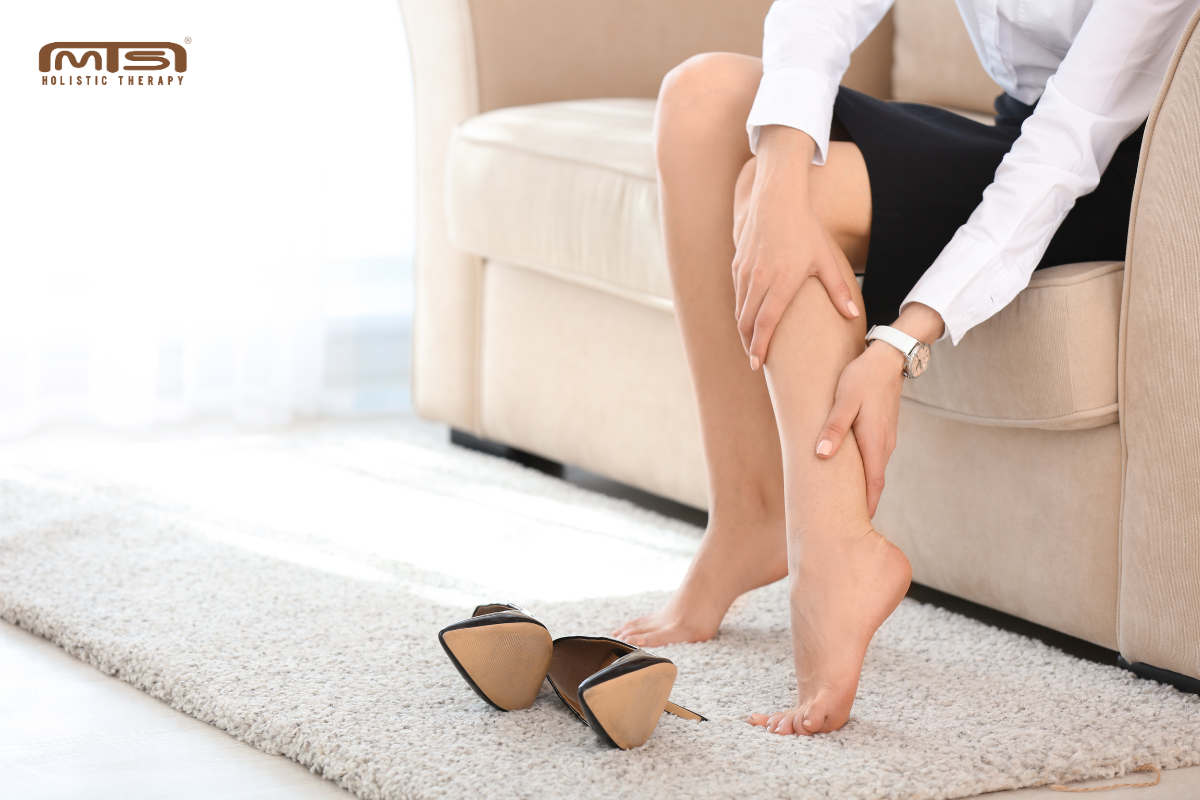
The daily feeling of heaviness and pain in the legs, which occurs even without intense exercise, can be frustrating. We're not talking about soreness after the gym or a long walk. We are talking about a condition in which the legs are tired already in the morning and become heavier and heavier during the day, as if every activity is beyond one's strength. Often the causes are sought in circulation, iron deficiency or a sedentary lifestyle. However, something that is in direct contact with the ground - the feet - is rarely considered. Could chronic leg fatigue be due to their malfunction?
What does chronic leg fatigue mean?
Chronic leg fatigue is a condition in which a feeling of heaviness, tightness or weakness in the muscles of the lower limbs persists for days or weeks, without an obvious cause of injury or disease. It may be accompanied by calf pain, swelling of the feet, a tingling sensation or muscle tension. For some people, the symptoms worsen in the afternoon or evening, while for others they appear immediately after getting out of bed.
In the medical literature, chronic leg fatigue is often linked to venous insufficiency, neurological problems, but also to gait biomechanics. The foot, as the foundation of the entire posture, is crucial in force transmission, cushioning and stabilisation of the body during movement. Disturbances in its function can result in overloads being transmitted higher up - all the way to the hips, the spine or precisely the leg muscles.
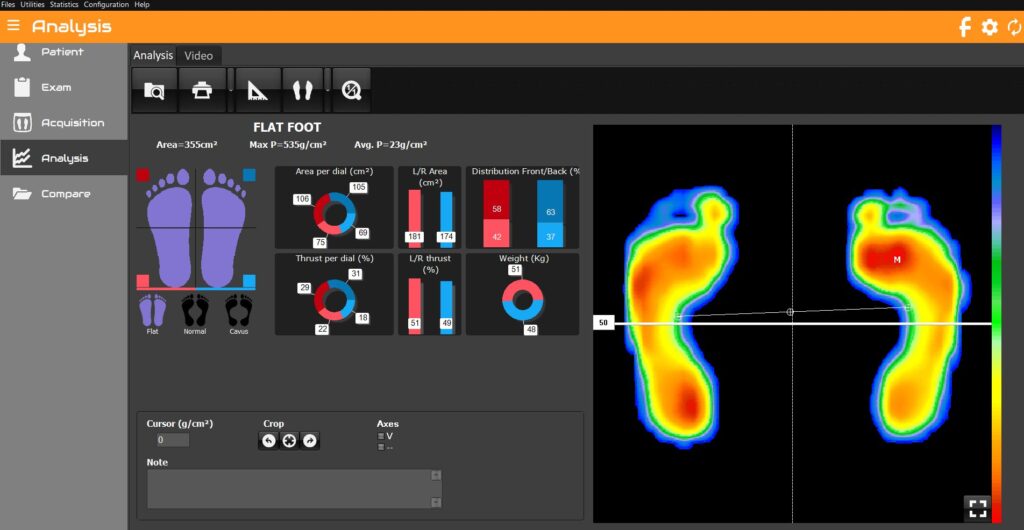
Do you suspect a foot biomechanics disorder? Perform computerised foot examination, which allows the precise determination of pressure distribution, asymmetries and abnormalities in posture and gait.
How does the foot affect chronic leg fatigue? Checklist
If you're wondering if your chronic leg fatigue is related to your feet, check out this checklist. Answer yourself honestly:
- Do you notice asymmetry in shoe wear?
- Do you tend to have a collapse of the longitudinal arch of the foot (known as flat feet)?
- Do you often stand 'outside' your feet or conversely have a sinking inwards feeling?
- Do you get pain in the metatarsal, heel, calf area after walking for a long time?
- Do your knees run inwards when standing or walking?
- Are your feet noticeably swollen and warm after a long day at work?
- Do you experience leg cramps at night?
Did you answer at least part of these questions with a 'yes'? It is very possible that chronic leg fatigue has its origin in the biomechanics of the foot.
Computerised gait testing - how does it work and what does it reveal?
Modern technology nowadays allows an accurate analysis of gait and pressure distribution on the foot. Computer-assisted gait testing, also known as pedobarography, is based on a dynamic analysis of foot contact during gait and static posture. The patient walks on a special mat equipped with sensors that analyse, among other things:
- real-time pressure distribution,
- load asymmetries,
- work of the ankle, knee and hip joints,
- stability when walking and standing.
This can accurately determine whether lower limb fatigue is due to uneven loading of the foot, misalignment of the heel bone or overload due to rotation of the ankle joint.
Chronic leg fatigue, which hitherto seemed difficult to explain, often gains a definite cause after such an examination. What is more - it is also possible to select a precise therapy.
Chronic leg fatigue vs orthotics - what can be gained?

Based on computer analysis of the feet, it is possible to design a custom orthoticswhich realistically relieve leg muscle strain, improve biomechanics and provide relief from chronic leg fatigue.
Well-chosen orthotics not only act on a comfort level, but have a real impact on the function of the entire lower limb. Their function is to:
- correction of foot alignment (e.g. supination, pronation),
- compensation of limb asymmetry,
- improving pressure distribution on the foot surface,
- overload cushioning,
- ankle and knee joint relief.
According to research, individually fitted insoles significantly reduce the feeling of leg fatigue after just 4 weeks of regular use. For people with excessive pronation, insoles reduce the tension in the calf muscles, which has a direct impact on daytime comfort. If chronic leg fatigue is your everyday problem, it is worth investing in individual diagnostics and solutions tailored to your anatomy!
FAQ
Yes, it can. If the feeling of fatigue is accompanied by pain, numbness or weakness in the limbs, chronic venous insufficiency, neuropathies or systemic diseases, among others, should be ruled out. However, it is worth starting with an analysis of the mechanical workings of the foot.
Definitely yes. Often the foot functions abnormally for years before pain develops. Symptoms such as chronic leg fatigue may be the first sign of disturbed biomechanics.
Off-the-shelf orthotics can provide relief in simple cases, but are no substitute for an individually tailored solution based on gait analysis. For people with chronic leg fatigue, orthotics designed on the basis of a computer study are a better choice.
To some extent - yes. Exercises for foot mobility, stretching the fascia, strengthening the deep muscles and working on posture can improve the situation. However, the key is to find out the cause - and for this, professional diagnosis is sometimes essential.
The analysis itself usually takes several minutes. The process of designing the insoles takes from a few days to two weeks, depending on the facility. The effects of wearing them can be noticed after just a few days.



