

If you are experiencing pain, swelling and redness in one of your joints, it could be the result of synovial bursitis. This is an important joint structure that protects the joint tissues from excessive friction and strain. There are three main areas where this bursitis can occur: the knee, the shoulder and the elbow. How do you recognise the symptoms that accompany this inflammation? Are there ways to alleviate the symptoms at home?
What is a synovial bursa?
In the joints of our body, there is a structure that we call the synovial bursa. It is a type of connective tissue structure inside the joint capsule, or more precisely in the synovial membrane. The main function of the synovial bursa is to produce synovial fluid, which plays a very important role in our joints.
The joint fluid acts as a kind of lubricant, facilitating movement within the joint. It is thanks to the synovial bursae that joint fluid is produced and maintained. However, its role is not only to facilitate movement. The synovial bursae also have a protective function, especially in areas of the joints that are prone to injury and strain.
Another important aspect is that joint fluid helps to reduce the friction between the various components inside the joint, such as muscles, tendons and other soft tissues, against the moving bony structures. This allows for smooth and painless movement of our joints.
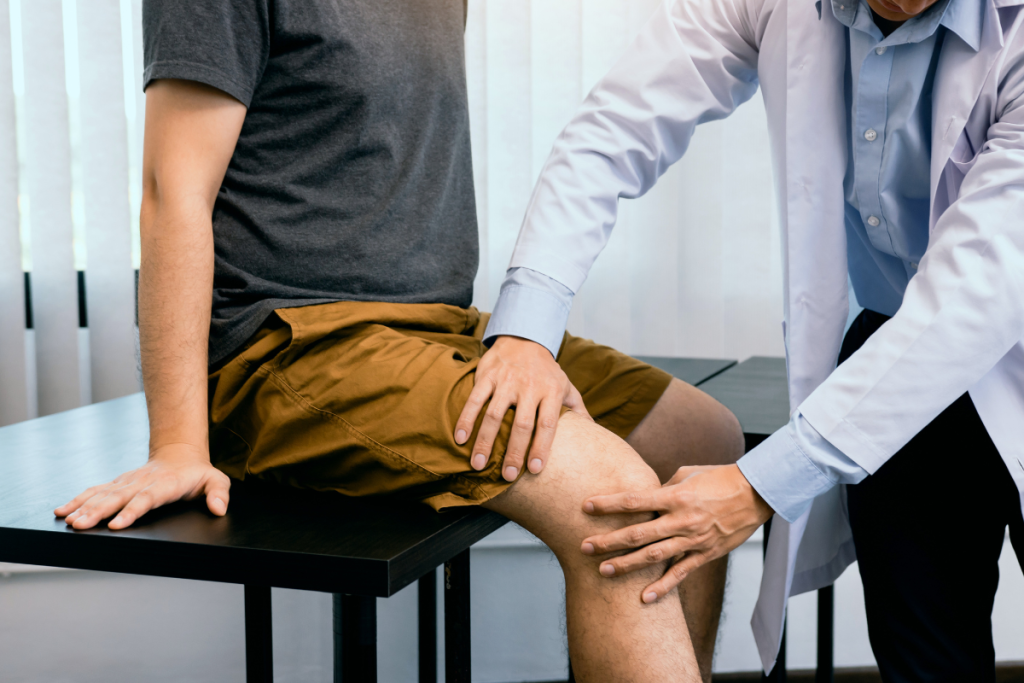
There are a number of different joint bursae in the human body, which perform their functions in different joints. In the shoulder joint, for example, there are several important bursae, each with their own tasks. They are responsible for reducing friction and provide stabilisation at the relevant areas of the shoulder joint, protecting our tissues from excessive stress and injury.
Synovitis - causes
In healthy joints, movement is smooth and painless, thanks to the work of healthy synovial bursae. These small structures produce joint fluid in sufficient quantity to avoid friction between the bones and muscles inside the joint. Nevertheless, sometimes movement becomes painful. This can be a signal that one or more of the bursae in the joint is inflamed. There are many different causes of synovial bursitis, but a few are the most common:
- Micro-injuries that accumulate as a result of prolonged overload, such as forced kneeling position, habitual leaning on the elbows or sitting on a hard surface.
- Excessive compression of the soft tissue in the joint, often caused by wearing tight shoes for long periods of time.
- Sudden injuries, such as impacts, falls, injuries that generate a high compression force on the tissues of the joint.
- Autoimmune diseases such as gout and rheumatoid arthritis.
- Osteoarthritis.
- Blood clotting disorders, known as coagulopathies.
- Metabolic diseases.
- Bacterial and viral infections.
All of these factors can lead to synovial bursitis, which can cause pain and discomfort in the joint in question. If you have a suspicion that you are suffering from synovial bursitis, it is important to consult your doctor for appropriate diagnosis and treatment.

Synovitis - symptoms
When the inner layer of the synovial bursa becomes irritated, the reaction of the bursa is to overproduce exudate fluid that cannot completely absorb, leading to swelling. If you have synovial bursitis, you may experience the following symptoms:
- Swelling, which manifests as increased joint circumference.
- Pain that increases during joint movement or pressure on the inflamed joint.
- Reddening of the skin in the affected area.
- Increased sensitivity of the joint and surrounding tissues.
- Joint stiffness and limited ability to move freely.
If you notice severe redness and increased temperature within the affected joint, this may suggest a developing bacterial infection and a build-up of pus in the synovial bursa. If this is the case, an LP may be required to assess the fluid content and antibiotics may be introduced for treatment.
Bursitis - treatment
Treatment of synovitis is tailored to the cause and severity of the inflammation, the amount of accumulated fluid in the bursa, the rate of accumulation and the location of the affected joint. In most mild cases, conservative treatment is used, some of which can be carried out at home:
- Rest - it is advisable to avoid putting excessive strain on the affected joint, as excessive activity can exacerbate pain and aggravate inflammation.
- Painkillers and anti-inflammatory drugs - often patients take oral medication and use ointments and gels containing non-steroidal anti-inflammatory drugs to help relieve pain and reduce inflammation in the joint.
- Cooling - applying ice or cold compresses to the inflamed area helps to reduce pain and swelling.
- Gentle massage - this is sometimes used to speed up the absorption of excess exudate fluid, for example using peppermint oil, which has an analgesic and cooling effect.
- Physical therapy - patients with synovitis may benefit from various rehabilitation treatments such as cryotherapy, shock wave, laser therapy, iontophoresis with an anti-inflammatory drug, TENS currents or magnetotherapy.
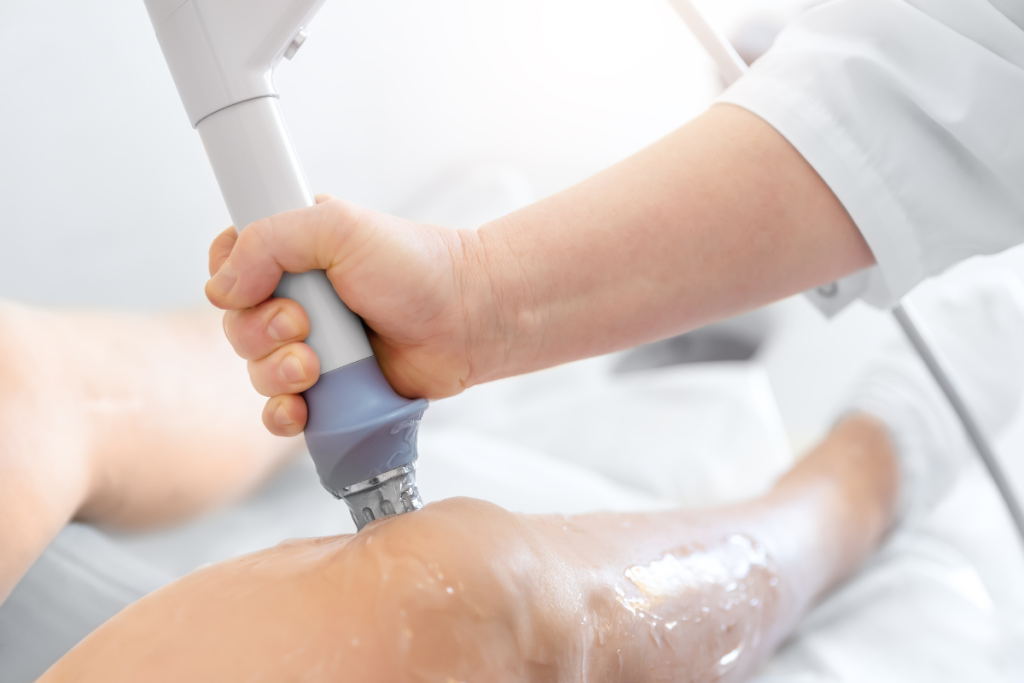
Shockwave is an advanced physical therapy method for the treatment of synovitis bursitis. By emitting high-energy sound waves, it stimulates regenerative processes and contributes to reducing pain and improving joint mobility, accelerating the healing process.
Physiotherapy plays a key role in the treatment of synovitis. Our therapists help patients to relieve pain, reduce swelling and improve joint mobility through a variety of methods. These include manual therapy, strengthening exercises, electrotherapy and techniques to reduce muscle tension. Physiotherapy is an effective part of rehabilitation.