
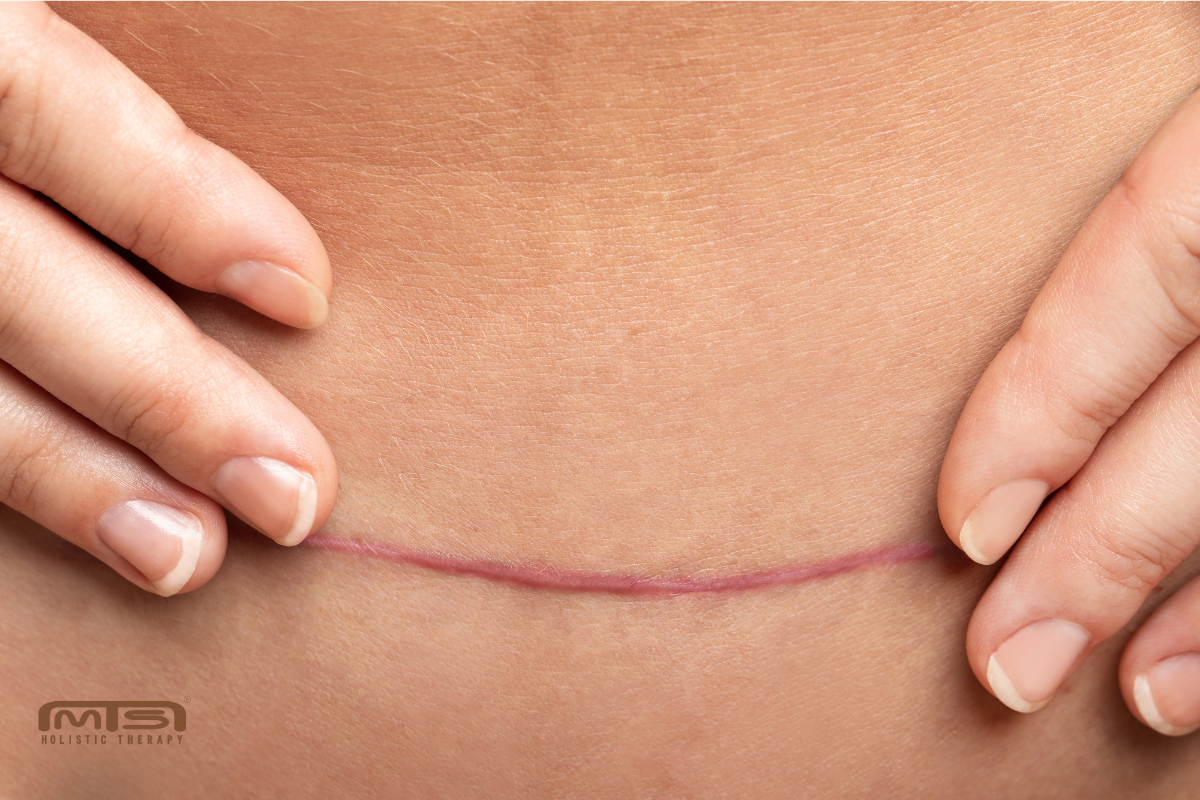
In Poland, more and more births are ending in caesarean sections- according to 2016 data, as much as 45.8% women have given birth in this way, which puts our country at the forefront of European statistics. Although the procedure saves the life of mother and child, it leaves a lasting mark: both physical and emotional. The healing process of the external wound is usually fast, but the reconstruction of the deep tissues requires much more time. Adhesions, strains and restrictions of movement in the scar area can occur even many months after the birth, affecting the woman's posture, organ function and well-being. More and more specialists are emphasising that scar therapy after a caesarean section is not only a matter of aesthetics, but above all of health and comfort. So when is it worthwhile to start working with a scar and what can be gained from it?
Why work with a birth scar?
A caesarean section scar is not only an aesthetic mark, but also a structure that affects the functioning of the entire musculo-fascial system. The tissues after surgery can become adhesions, limiting the mobility of the skin and internal organs. Over time, this leads to lower back pain, pelvic tension or discomfort during intercourse. Regular caesarean scar therapy helps to relax these areas, improve circulation and restore normal muscle function.
Scar work is also a way to support emotional recovery after childbirth. Touch, the conscious feeling of the body and the release of tensions promote the recovery of contact with one's body, which is particularly important after experiencing a surgical procedure.
C-section scar therapy - what symptoms should you look out for?
Many women think that if a scar looks good from the outside, it does not require any intervention. Meanwhile, even small adhesions in the deep tissues can cause discomfort in distant parts of the body. C-section scar therapy is indicated when they appear:
- pain in the lower abdomen, scar region or lower back,
- a pulling sensation when straightening the body,
- postural disorders and pelvic asymmetry,
- pain during intercourse or menstruation,
- problems with pelvic floor muscle tone,
- a „dragging” sensation when breathing deeply.
Ignoring such symptoms can lead to permanent compensations in the body and chronic tensions, so it is worth consulting a physiotherapist just a few weeks after giving birth.
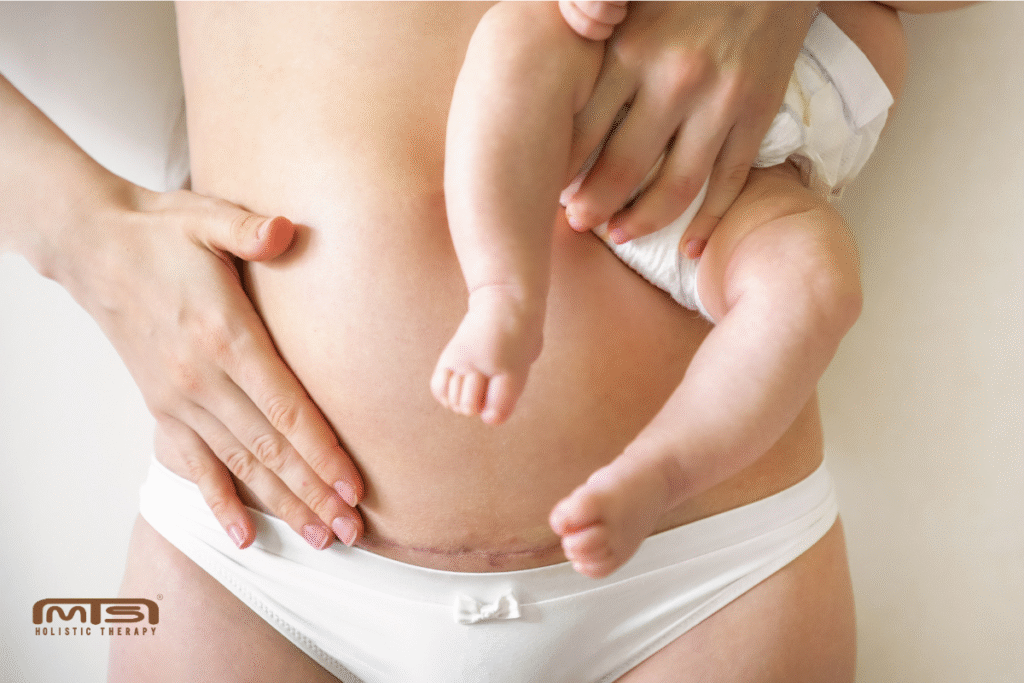
You can read more about how to support your body after childbirth and how C-section scar therapy works here: „Urogynaecological physiotherapy”.”
What is the assessment and treatment of a caesarean section scar?
The first step is a detailed assessment of the scar - the therapist analyses the appearance, mobility, tension and any adhesions. He then selects appropriate manual techniques and exercises to promote regeneration. C-section scar therapy ranges from gentle work within the scar to action on adjacent structures - abdominal muscles, diaphragm or pelvic floor.
The therapy is completely safe and tailored to the stage of healing. Initially, the focus is on improving blood supply and sensation at the incision site, and over time deeper fascial relaxation techniques are introduced. The patient is often also given a set of home exercises to help maintain the effects of the work in the surgery.
C-section scar therapy - techniques used by therapists
Modern urogynaecological physiotherapy combines many methods to effectively promote healing and regeneration. When working with scar tissue, the methods used include:
- manual scar therapy - gentle tissue mobilisation techniques to improve tissue elasticity,
- fascial therapy - affects the deeper layers of the body, reducing adhesions and tension,
- Indiba - a radiofrequency technology that stimulates microcirculation and accelerates tissue healing,
- working with the breath and pelvic floor muscles - to restore correct tension patterns and posture.
Each of these methods can be part of an individually tailored session aimed at improving a woman's comfort after childbirth. Regular caesarean scar therapy affects not only the aesthetics of the scar, but also the function of the whole body.
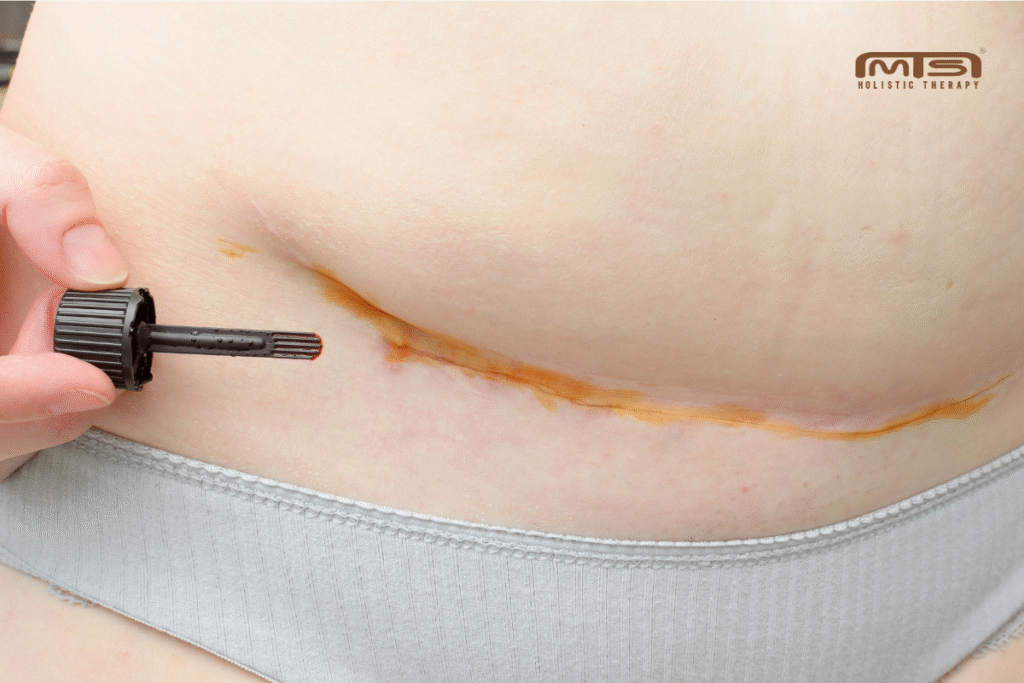
Technology can also be an effective complement to scar work „Indiba: accelerating tissue regeneration”.” which promotes the healing process and improves the elasticity of the skin after caesarean section.
When is the best time to start scar therapy?
Usually, therapy can be started once the external wound has completely healed, i.e. about 6-8 weeks after birth. Earlier interventions - such as gentle touch or breath work - can be introduced earlier to promote healing. The sooner caesarean scar therapy is implemented, the better the chance of avoiding unwanted adhesions and movement restrictions.
However, this does not mean that after a few months or years it is too late. Even old scars can respond to therapy, improving mobility, reducing tension and relieving pain.
FAQ
No, the therapy should not cause pain. The sensations are usually mild and any discomfort quickly subsides as the tissues relax.
Usually 3 to 6 sessions are recommended, at intervals of 1-2 weeks. Regular caesarean scar therapy produces the best results when supported by home exercises.
Yes, simple self-massage techniques and breathing exercises can be performed after consulting a physiotherapist. However, it is important to know which movements to avoid.
Yes, improving tissue elasticity and circulation makes the skin around the scar smoother and the abdomen regains its natural shape.



