

Foot drop is a symptom that is definitely cause for concern. It involves difficulty in lifting the forefoot when walking. It leads to a characteristic 'high step', known as a wading gait. For many people, the first association is severe damage to the fibular nerve, but in fact the cause is sometimes more complex. Is foot drop always due to nerve damage? Or could it also be the result of other mechanisms, such as abnormal muscle tone or fascial restrictions?
Foot drop and neurological causes
Very often, foot drop is combined with neurological problems. The most common culprit can be the common fibular nerve, which can become compressed in the area of the fibular neck - especially in people who frequently put their foot down or wear tight shoes. Damage to this nerve leads to weakness of the muscles responsible for dorsal flexion of the foot, including the tibialis anterior muscle.
Other neurological causes include spinal cord injuries, lumbar disc herniations, multiple sclerosis, stroke or diabetes-related neuropathies. In these cases, foot drop may be one of the first symptoms, so prompt neurological diagnosis is crucial.
Foot drop and biomechanics - when neurology is not the culprit
Contrary to what you may think, not every foot drop is necessarily the result of damage to the nervous system. Sometimes there is a so-called functional insufficiency, which refers to disorders of body biomechanics. Overloading of the plantar flexor muscles, contracture of the rectus femoris muscle, tightness of the iliotibial band or restricted mobility in the ankle joint - all these factors may alter gait patterns and make it difficult to lift the foot properly.
Some people, especially the elderly or those who are not very physically active, have weakened deep muscles that stabilise the pelvis and lower limb. In such cases, foot drop occurs not as a result of nerve damage, but from a lack of sufficient strength and motor coordination.
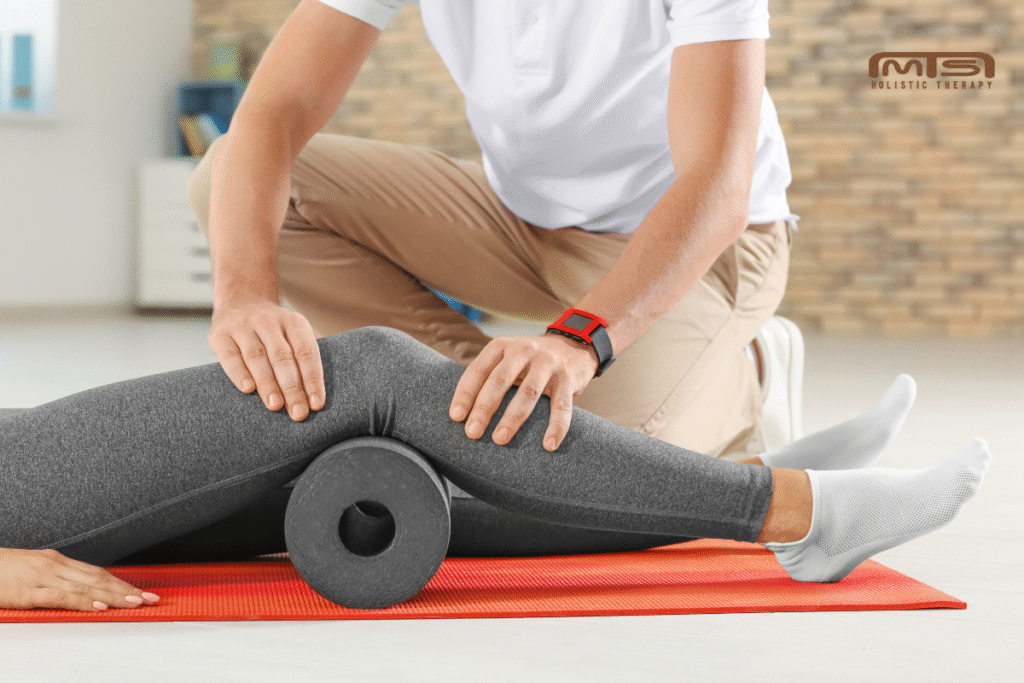
With foot drop, comprehensive therapy is extremely important, which, in addition to strengthening the weakened muscles, includes learning the correct gait pattern and improving the stability of the whole limb. Rehabilitation of the lower limb will help you regain control of your foot movement!
Diagnostics
A well-conducted diagnosis is the key to effective treatment. The first step is a neurological examination, including tests of muscle strength, reflexes and sensation. If necessary, the doctor may order imaging tests (MRI of the lumbar spine, ultrasound of the nerves) or electromyography (EMG) to assess nerve conduction.
However, if functional causes are suspected, it is worthwhile to benefit from movement diagnosis by a physiotherapist. Gait pattern analysis, functional testing and examination of ranges of movement can reveal limitations that are not apparent in classic neurological tests. A holistic view of the patient is crucial - from pelvic alignment to hip and knee mobility to the foot.
Foot drop - what is worth implementing before pain occurs?
If the foot drop has a mechanical cause, it is worth acting as early as possible to prevent overload and pain. Regular strengthening of the dorsiflexor muscles of the foot, improving the mobility of the ankle joint and working on trunk and pelvic stabilisation can significantly reduce the risk of further problems.
Manual techniques, such as fascial therapy or neuromobilisation, which restore tissue flexibility and improve nerve function, are also helpful. In cases where the mobility of the foot is already severely restricted, orthoses are used to assist forefoot elevation during gait.
Foot drop in active people - how to prevent overload?
Physically active people can compensate for a slight foot drop over a long period of time by unconsciously changing the movement pattern. Unfortunately, this often leads to overload in the hip, knee or lumbar spine. The key is prevention - proprioception exercises, postural control, regular balance work and strengthening the deep muscles.
It is worth remembering that foot drop is a symptom, not a diagnosis. The mere fact that the foot sinks during gait does not yet tell you the reason for it. Therefore, it is important to combine neurological and biomechanical knowledge in the assessment of each case.

Complementary therapies can be individually fitted orthoticswhich improve the biomechanics of the foot and support its correct positioning during the support phase.
When is it worth seeing a specialist?
Disturbing symptoms include not only the foot drop itself, but also a feeling of numbness, burning, difficulty climbing stairs or asymmetry in foot position. If these symptoms appear suddenly or worsen, a consultation with a neurologist is necessary. In other cases, especially when functional causes are suspected, it is advisable to seek the help of a physiotherapist or movement therapist.