
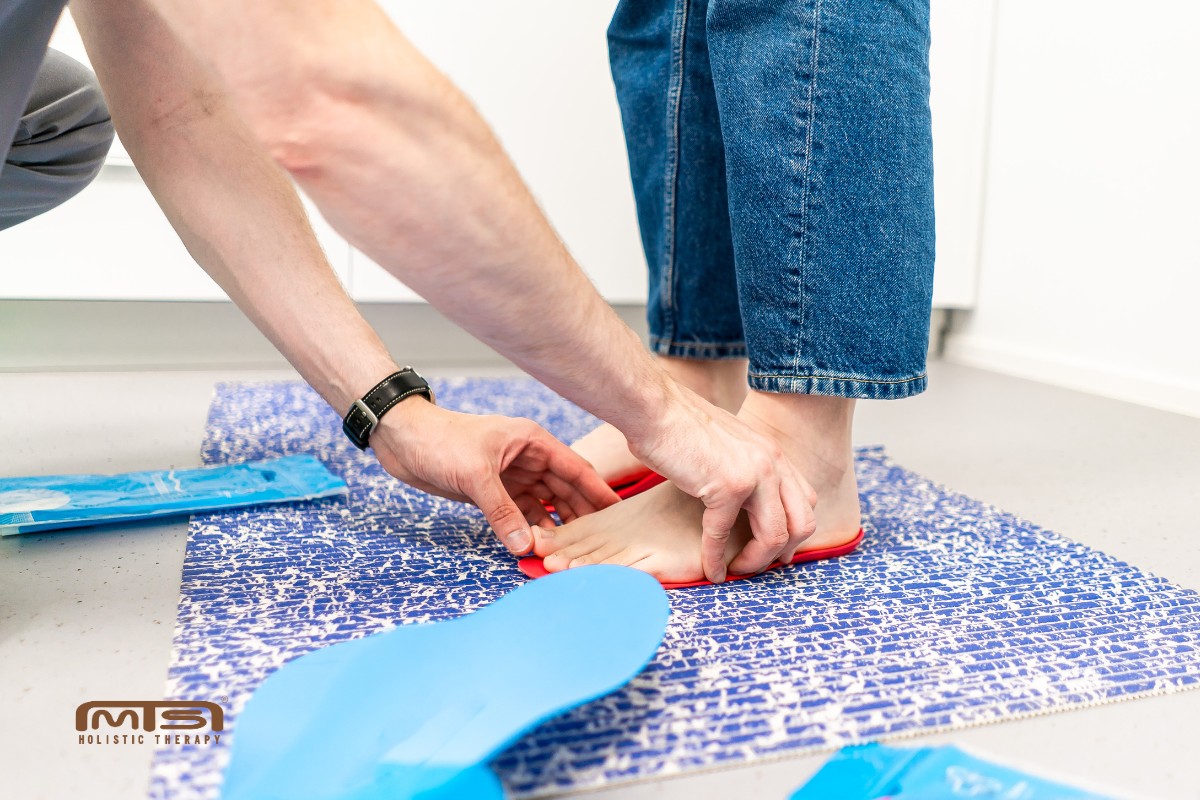
Buying custom orthotics is an investment in the health of your feet, knees and spine. However, just wearing them is not always enough - what counts is whether an orthotics test confirms that they actually do their job for everyday movement. Poorly fitting or poorly shaped orthotics can not only fail to help, but can even make ailments worse. So how can you be sure that your equipment is working as it should?
Why is orthotics testing on the move crucial?
An orthotics test carried out in static, such as standing on a measuring platform, gives a limited picture. Your feet behave differently when walking, running or standing for several hours. In movement, overloading, twisting of the foot, uneven loading and instability become apparent. Therefore, a dynamic test - whether on a treadmill or while walking on a hard surface - is essential to assess the real effect of orthotics.
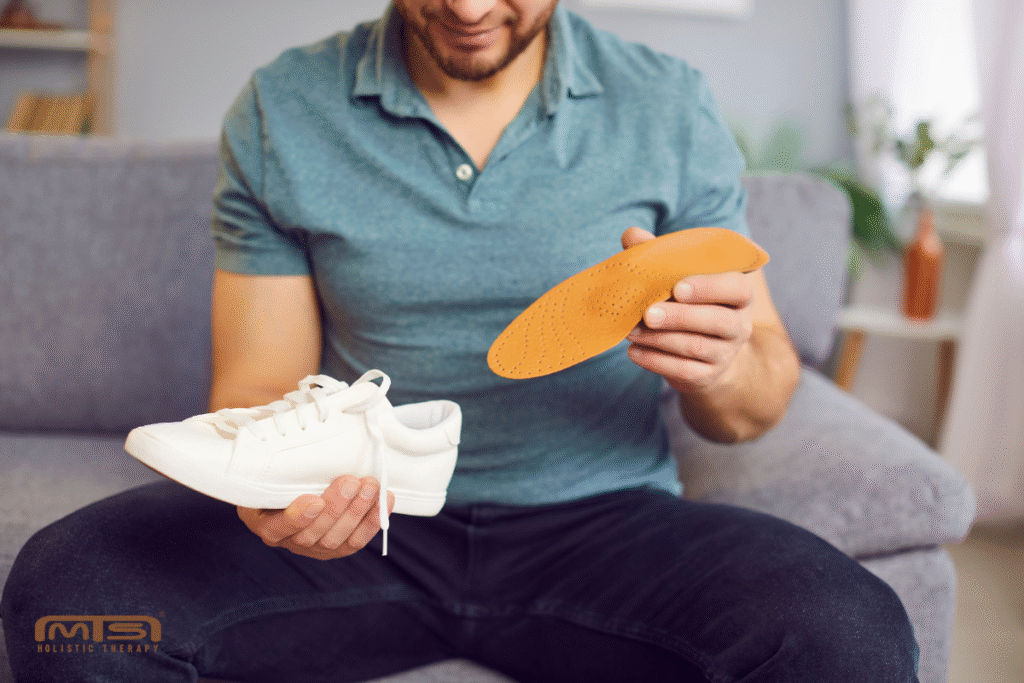
Problems with foot pain, knee pain or strain when walking? Individual orthopaedic insoles support the correct positioning of the foot, improve the biomechanics of movement and reduce the risk of injury.
Orthotics test - what does the physiotherapist test?
During the visit, the physiotherapist does not just look at whether the orthotics are comfortable. An orthotics test involves assessing multiple elements of movement and body alignment to catch both obvious and subtle problems.
- Gait analysis
The physiotherapist observes the alignment of the feet, the work of the ankles, knees and hips. He looks for asymmetries and moments when the foot loses proper support. - Pressure distribution
Using a platform or measuring inserts, it is checked how the load is distributed between the forefoot, heel and sides of the foot. Uneven distribution can mean that the insole needs adjusting. - Postural stability
The orthotics test also includes balance testing in different positions - for example, on one leg or with eyes closed - to assess the effect of orthotics on postural control. - Depreciation
Check how the insole absorbs shock when walking or running. An insole that is too hard can overload the joints and one that is too soft may not stabilise the foot. - Muscle response
It is observed whether orthotics change the muscle tone in the feet and calves - sometimes improved biomechanics make the muscles work less intensely and fatigue slower.

How to measure effects - sensation, pain, stability
The orthotics test does not end in the surgery. What is important is the subjective feeling of the patient after a few days of use. Pay attention to three main aspects:
- Feeling in the feet - Is contact with the ground more even, do you feel more control over the movement?
- Pain - should decrease or disappear; if new complaints appear, something is wrong.
- Stability - assess whether you feel more confident when walking or running, with less side-to-side "rocking" and no sensation of foot collapse.
It is worth taking notes of these observations, as sometimes the changes are subtle and easy to miss.
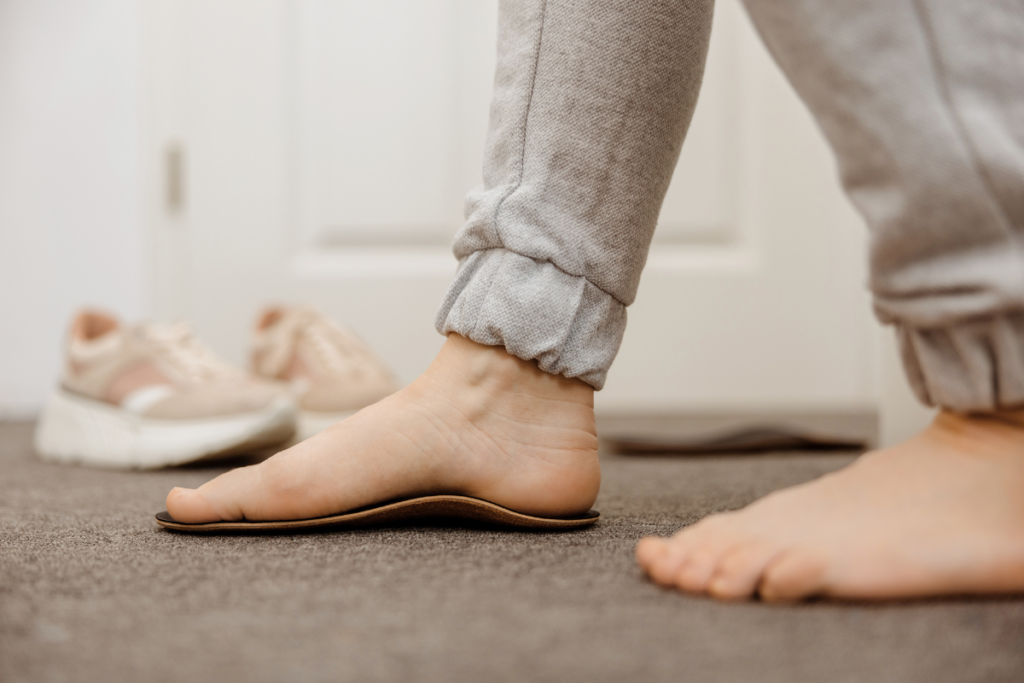
Problems with foot pain, uneven weight bearing or changes in limb alignment? Computerised foot examination allows pressure distribution, stability and gait biomechanics to be accurately assessed and effective solutions to be selected.
When do orthotics need adjusting?
Even the best-made orthotics may need to be corrected. An orthotics test can reveal:
- new pain in other parts of the foot or leg,
- a feeling of excessive pressure in one point,
- No improvement after 2-3 weeks of wearing,
- accelerated wear of material in a specific location.
In these situations, it is worth returning to the surgery for a physiotherapist or orthopaedic surgeon to make an adjustment. Sometimes a minimal change in support height or a different type of padding is all that is needed for comfort and biomechanics to return to normal.
FAQ
You can observe how you feel, record your walking and compare foot placement, but professional measurements will give more accurate data.
A check-up is recommended 2-3 weeks after starting to wear, and every 6-12 months thereafter.
Not always - the foot needs adaptation, usually a few days to two weeks.
No, it's more like a series of measurements and exercises that can be tiring but shouldn't cause pain.
Yes, as long as they have adequate space inside and do not change the shape of the insole.



