
One of the most common and current health problems in highly developed countries is constipation. We define it as passing stools less than twice a week. What symptoms accompany constipation? Patients report three main symptoms: excessive urge to defecate, passing solid stools and a feeling of incomplete bowel movement. Commonly known as constipation, these occur when intestinal contents remain in the digestive tract for a prolonged period of time. This phenomenon leads to a thickening of the intestinal contents due to the absorption of water. The consequence is a harder stool, which results in less frequent bowel movements often accompanied by pain. Long-term constipation is a serious problem that should not be underestimated! Although the problem is well known to both men and women, it affects women far more often. It is also unfamiliar to older people who have limited mobility. What are the natural ways to deal with constipation? Can visceral therapy help with constipation? Read more!
How do we divide constipation?
We divide constipation into three main categories, depending on their causes:
- Functional (habitual) constipation: These types of constipation are the result of slowed intestinal peristalsis, leading to excessive water absorption in the large intestine and thickening of the faecal mass. As a result, the stool becomes compacted and hard, often resembling a dry ball.
- Spastic constipation: In this case, the bowel narrows around the faecal mass, which can lead to inflammation of the mucosa. This results in periods of constipation and periods when bowel movements are loose. Stools in cases of spastic constipation are small lumps or pencil thin.
- Organic constipation: These constipations have their cause in physical obstacles to the passage of stool through the bowel, such as stenosis caused by the presence of a cancerous tumour.
- Idiopathic constipation: This is a type of constipation whose source is unknown. It is the most common form of constipation and is a problem for more than 90% patients who seek help from a doctor for this condition. Idiopathic constipation can occur in people of all ages, but is more commonly diagnosed in women and people over the age of 65.

What causes of constipation do you know?
- Eating irregularly can disrupt bowel rhythms, leading to bowel movement problems.
- A diet high in fat and simple carbohydrates, while low in fibre, can promote constipation.
- Low fluid intake can cause dehydration, which negatively affects bowel function.
- Lack of physical activity and a sedentary lifestyle can slow down intestinal peristalsis.
- Frequent withholding of the need to defecate.
- A non-physiological defecation position, defecating in a sitting position instead of a squatting position, can make the process less effective.
- Excessive use of laxatives can lead to intestinal addiction to these substances.
- During pregnancy, hormonal changes and the pressure of the growing foetus on the intestines can lead to constipation.
- Some drugs, such as opioids, can affect bowel function and lead to constipation.
- There are many diseases and conditions that can cause constipation, including Hirschprung's disease, haemorrhoids, colon cancer, diverticular disease, hypothyroidism, diabetes, Crohn's disease, depression, as well as ovarian and uterine tumours and endometriosis.
Visceral therapy in the fight against constipation?
Did you know that physiotherapy is an extremely effective option for treating constipation? However, it is not a very widely known method. It is time to change this, as it can effectively address chronic constipation problems in many cases. A particularly effective form of physiotherapy for constipation is visceral therapy. This therapy is based on massaging the internal organs in the abdominal cavity through manipulation on the skin. Initially, the therapist assesses the tension in the abdominal cavity by palpation. In this way, he or she is able to identify the source of the problem and possible complications. The aims of visceral therapy are:
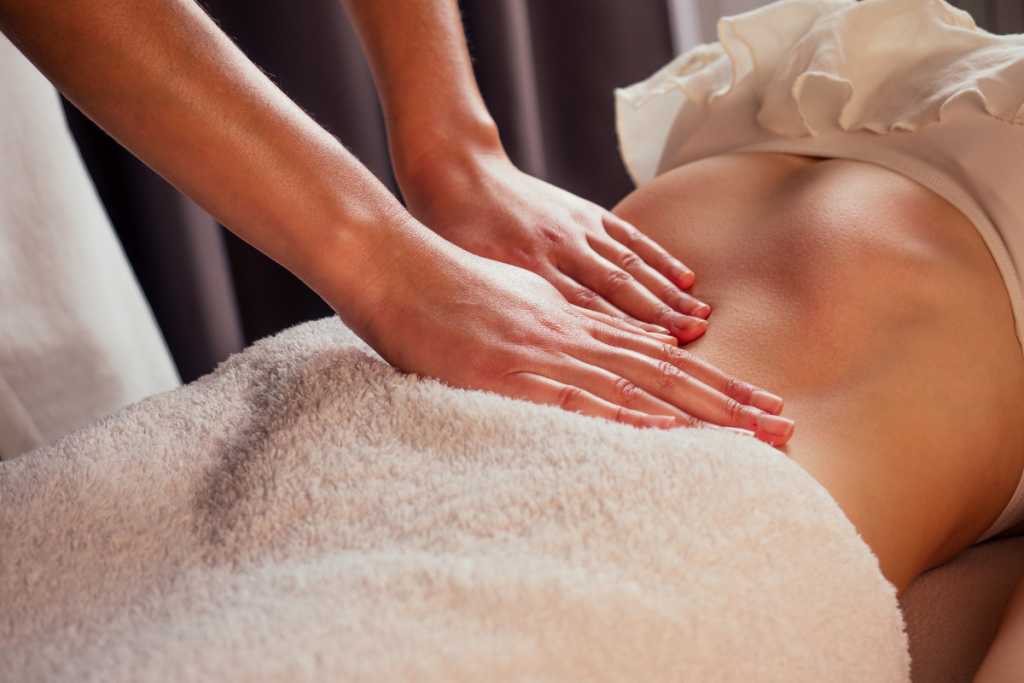
- Relaxation of structures in the abdominal cavity: Therapy aims to relieve tension and stress on internal structures, which can help to improve bowel motility.
- Normalising fascia tension: Fascia is a connective tissue that can become tense. Visceral therapy helps to restore its proper tension, which can benefit the function of the digestive system.
- Regulating bowel function: By stimulating the internal organs, visceral therapy can help to regulate bowel function, which is important in the treatment of constipation.
- Improving blood flow through internal organs: The therapy can also benefit blood circulation in the abdominal cavity, which can improve the overall function of internal organs.
It is worth noting that visceral therapy should be performed by a qualified physiotherapist who has experience. W MTS Holistic Therapy Our specialists are waiting for you!
Visceral therapy not only for constipation!
The therapy also affects the nervous system of the internal organs in the abdominal cavity. The brain-gut nerve axis plays an important role in the overall functioning of the gastrointestinal tract. As a result, the gut is referred to as the second brain of man. Visceral methods have a positive effect on the transmission of information to the brain, which can contribute to better regulation of digestive processes.
Visceral massage not only supports bowel function, which is particularly beneficial in cases of constipation. In addition, by reducing tension, it helps to significantly reduce pain and improve muscle function in other areas of the body. This process leads to better blood circulation and tissue nutrition. It has a positive impact on the overall performance of the body and significantly improves the patient's quality of life.