

Every operation, whether on the spine, knee, hip or other parts of the body, involves a certain risk of complications and the need for long-term rehabilitation. However, how quickly and effectively we return to full fitness depends largely on the appropriately selected post-operative physiotherapy. After any surgery, our body requires time to recover, and scarring, muscle weakness or restrictions in mobility are just some of the challenges we may encounter. This is why post-operative physiotherapy is important? Not only does it help to alleviate the side effects of surgery, but it also speeds up the recovery process. If you are post-surgery or just planning one, remember that proper rehabilitation is an investment in full recovery!
What role does post-operative physiotherapy play?
In the rehabilitation process, post-operative physiotherapy speeds up the return to full fitness. With appropriately selected exercises and therapeutic techniques, it helps to offset the side effects of surgery, such as pain, stiffness or muscle weakness. The rehabilitation programme is individually tailored to the patient's condition, his or her rate of tissue healing and the stage of the recovery process. For example, physiotherapy immediately after surgery focuses on reducing swelling and pain, while after a few weeks rehabilitation focuses on restoring full mobility and strengthening muscles. It is worth remembering that the effectiveness of the therapy is also dependent on the patient's condition prior to surgery.
Post-operative physiotherapy - advantages
Post-operative physiotherapy offers a number of benefits that significantly aid the recovery process after surgery. First and foremost, it helps to reduction of oedema and inflammation, which accelerates tissue healing and reduces pain. In addition, pain relief i thromboprophylaxis reduce the risk of complications such as blood clots or stasis. Scar therapy, i.e. scar mobilisation and its massage, increases the elasticity of the skin, which affects the comfort of movement. The physiotherapist also works on restoration of joint movement i muscle strengtheningwhich prevents the weakening of the body structure. Thanks to stretching of shortened musclesrange of movement improves, and the whole treatment process also has a beneficial psychological effect, giving the patient a sense of progress and motivation for further rehabilitation. Ultimately, physiotherapy influences improving functionalitywhich allows the patient to return to daily activities more quickly.
What is physiotherapy after surgery?
- Manual therapy;
- Wiscelar therapy;
- Scar massage;
- Lymphatic drainage;
- Cryolipolysis;
- Kinesiology Taping.
What types of therapy do we offer?
Post-operative physiotherapy includes a variety of therapeutic techniques to aid recovery from surgery. One of the key elements is scar therapy, which involves mobilisation of the surgical scar, including massage, to improve its elasticity and reduce the risk of adhesions.
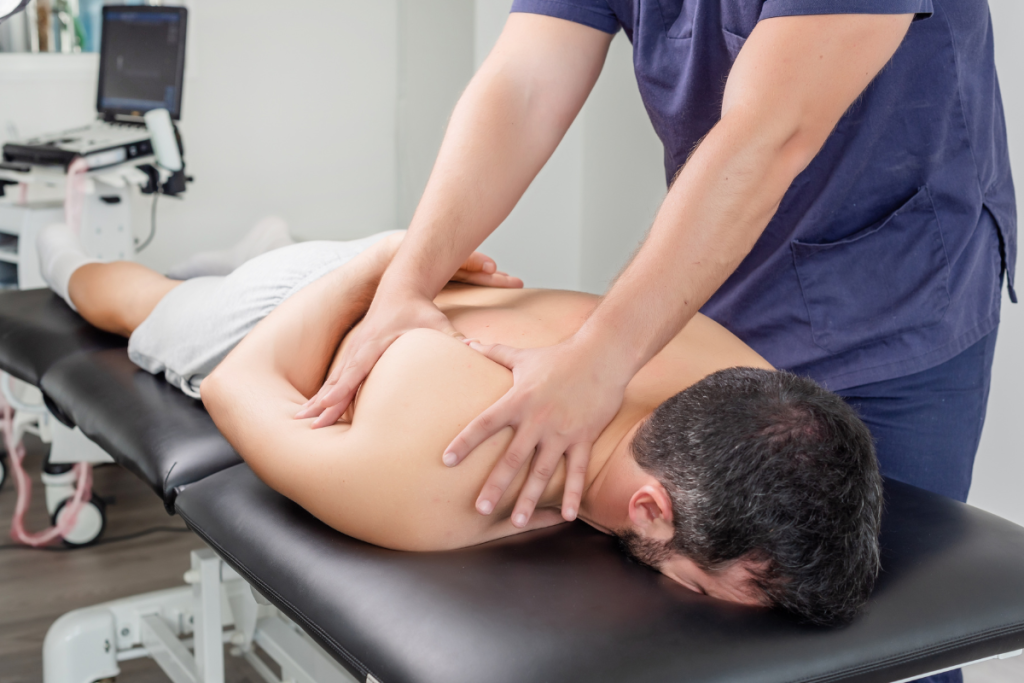
Manual therapy allows fascial elaboration of the tissues, which contributes to the removal of fascial distortions and improves blood flow. In addition, an important element is restoration of joint range of motionwhich prevents their stiffness after surgery, and strengthening muscle strength and improving muscle stabilisation, especially after orthopaedic surgery.
Reduction of swelling and fascial therapy effectively speed up the healing process. In some cases, it is also introduced osteopathic therapywhich aims to improve musculoskeletal function and tissue regeneration. This type of therapy is used after a wide range of surgeries, such as spinal surgery, hip or knee endoprostheses, ligament reconstruction (e.g. ACL, PCL), joint arthroscopies, as well as after oncological surgeries, including mastectomy. Post-operative physiotherapy is an essential part of rehabilitation for a rapid return to fitness and normal life activities.



