

Summer, with its holidays, trips, excursions, outdoor events, swimming and sunbathing, is a time of year that everyone loves. However, it is a difficult time for the health of our hair, as the sun's rays are very damaging to it. In addition, there are other damaging factors such as salt water. So how do you look after your hair in summer?
Why does hair get damaged more in summer?
The primary blame for summer hair damage is caused by UV radiation. This is because it causes the hair cuticles to bend, which leads to permanent damage to the hair cortex. UV rays degrade the hair cuticle and oxidise the lipids that bind the hair scales together.
The mechanical properties of the hair also change, the strands lose their elasticity, becoming brittle and dry to the touch. They then become tangled and difficult to comb. Melanin, which is a natural protective shield, is also oxidised by UV rays. This not only fades the colour of the hair, but also develops free radicals that damage the hair's internal structure.
Our hair is also very negatively affected by water, especially salt and chlorinated water. In addition, wet hair, attracts radiation, leading to damage to the keratin fibres. Air conditioning also has a negative effect, causing our hair to become dry and dull. In the case of bleached or coloured hair, the damaging effects of UV rays manifest themselves in yellowing or colour fading.
How do you look after your hair in summer to avoid damage?
Natural hair is less damaging than coloured hair, but we should stock up on UV-protective cosmetics and spray before sun exposure.
It is also important to regularly moisturise and nourish our hair with conditioners, masks or oils that will provide shine, protect against damage and breakage and split ends. It is also important to protect our heads from the sun, covering them with a hat, scarf or cap. This not only protects against hair damage, but also against sunburn and sunstroke.
Gentle cosmetics
As a rule, we are more active in summer and sweat more, so we wash our hair more often. During this time, it is advisable to choose gentle shampoos for daily hygiene: chamomile shampoo, nettle shampoo or shampoos for children. You can also use summer care products that contain extra sunscreen.
On hot days, leave-in conditioners and fine spray mists are ideal. It is also important to remember that bathing in salt water and swimming pools causes hair to lose moisture, so an extra supply of humectants is very important.
How to care for summer hair before and after swimming?
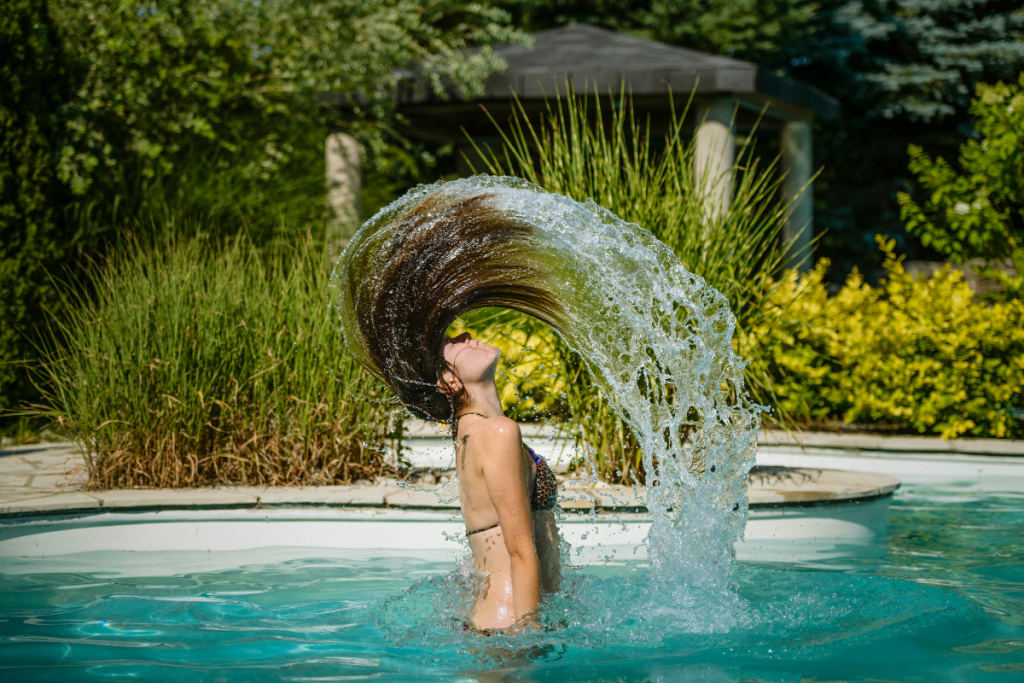
Sea, salt and chlorinated pool water are very bad for your hair. It is therefore advisable to apply a generous amount of oil before bathing to give your hair extra protection against UV rays or to use a special conditioner or mask. It is also a good idea to put your hair in a bun on top of your head so that it has as little contact with the water as possible. After bathing, rinse your hair very thoroughly and wash it with conditioner. The salt water or chlorine will cleanse them sufficiently, so they will not be greasy and you do not need to use shampoo. When bathing at the beach, also remember to rinse your hair every time you get out of the water.
The cuticles of damp hair exposed to the sun do not have the opportunity to close. This causes them to lose moisture, making them more susceptible to breakage and weakness. To prevent this, after washing your hair, dry it with a hairdryer set on a moderate heat setting and gently pin it up. After swimming in a pool, lake or sea, remember to dry your hair in the shade and protect it from direct sunlight.
Diet for healthy hair
Summer is also a great time to enrich our diet by eating plenty of fruit and vegetables and, unsaturated fatty acids. However, if, in spite of a good diet, your hair is dry, lacking in shine and falling out in large amounts, it is worth thinking about visiting a trichologist. We can also collect and dry herbs such as nettle or horsetail with our own hands and use them to make rinses. It is also healthy to drink herbal infusions and remember to hydrate your body regularly by drinking enough water.
Make sure your diet includes vitamins A, C and E to counteract the damaging effects of free radicals. A lack of vitamin A causes hair to become dry, brittle, fall out and split ends. Biotin, known as vitamin H, is crucial for the growth and healthy appearance of hair. Its deficiency can lead to excessive scalp flaking and the appearance of seborrhoea. Folic acid also promotes hair growth, making it stronger and thicker.
Make up the shortfall
Micronutrients worth including in the diet for weakened hair are zinc, copper and iron. These ingredients stop hair loss, stimulate hair growth and rebuild hair structure to prevent baldness. Make sure these are present in your diet and, if necessary, reach for supplements.

We lose more water from our bodies in summer, so it is important to replenish it regularly. Try to drink 2-3 litres of water a day. Consume oils and products rich in monounsaturated fatty acids, such as avocados, hazelnuts, pistachios and unrefined rapeseed oil. You can also reach for ready-made preparations with evening primrose oil or cold-pressed linseed oil. This will not only have a positive effect on the condition of your hair, skin and nails, but also on your mood and immunity.



