

We usually associate rehabilitation with the methods we undertake after the injury or serious injury. However, is this the only thing this field of medicine should be associated with? Rehabilitation is a therapeutic method that is important for patients who wish to regain their full fitness, but also to remain fit. Our specialists emphasise that it is indicated not only for injuries, but also for the treatment of chronic ailments. The methods are much more complex than simple exercises. All of these methods help to achieve the results our patients dream of. When is rehabilitation worthwhile? How do I sign up for rehabilitation and what principles will contribute to an effective recovery? Whether you are suffering from a specific problem or struggling with a variety of ailments, rehabilitation will speed up the healing process and restore the fully operational.
What is rehabilitation?
Rehabilitation is a comprehensive set of activities that restore or improve a patient's fitness. It includes people who have lost some of their dexterity for a variety of reasons and those who are struggling with congenital defects. Its main goal is to improve quality of life by reducing pain, improving function and limiting further progression of disability. Our specialists create an individual treatment plan tailored to each patient's health history and needs. Remember that rehabilitation varies greatly and there is no one-size-fits-all model; each case requires special attention.
Rehabilitation focuses on restoring patients' fitness and adaptation to new living conditions. It is an investment in mental and physical health, empowering people to achieve their best possible functioning, as defined by the WHO. Figures from the World Health Organisation indicate that nearly a third of the world's population, which is about 2.3 billion people, need rehabilitation. It is worth emphasising that not only adults, but also children may require rehabilitation. Therapy for children must take into account the specifics of their age and condition, and treatment methods.
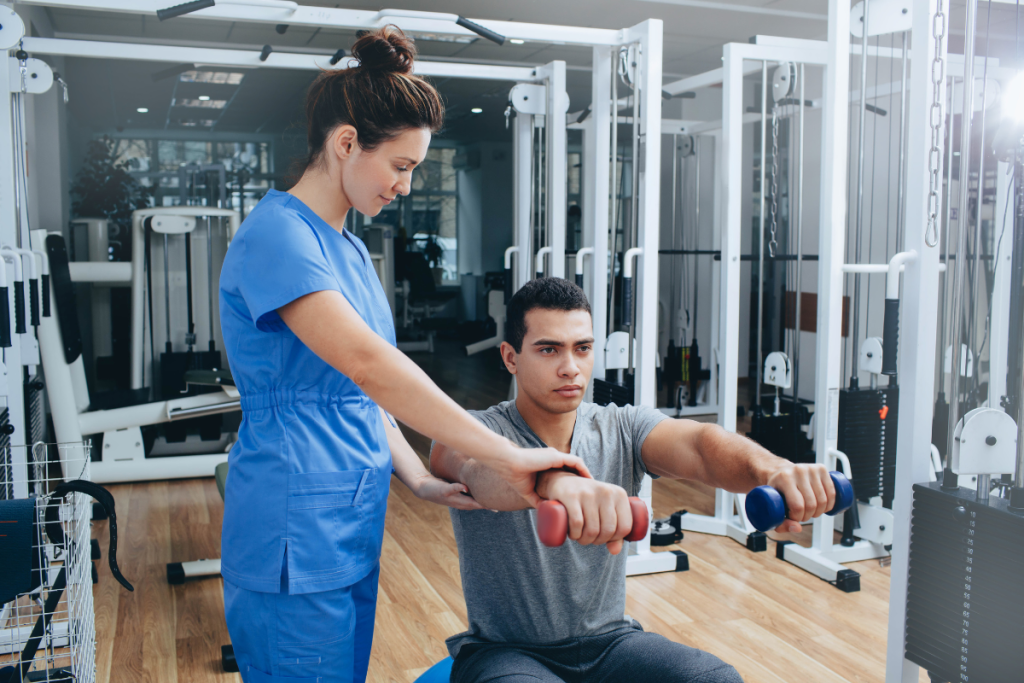
Rehabilitation - types and methods
Rehabilitation can be divided into three main forms tailored to patients' needs:
- Stationary - intended for people who require continuous medical care and who remain in a centre or hospital 24 hours a day.
- Day or outpatient rehabilitation - aimed at patients who commute to a facility, such as a rehabilitation centre, for rehabilitation treatments and return home afterwards.
- Rehabilitation in the patient's home - dedicated to people who cannot move to a rehabilitation centre due to a medical condition.
Rehabilitation methods are individually tailored to the needs of each patient and include a variety of approaches. Such as exercise, massage, kinesitherapy, as well as aquatic therapies and cryotherapy. Depending on the type of condition and severity of symptoms, a combination of different techniques and therapies may be required to achieve the best possible results.
Treatment in rehabilitation
Wondering which rehabilitation procedures are most popular?
- Laser therapy - is a treatment method using medical lasers that act on body tissues.
- Cryotherapy - a procedure that uses low temperatures to heal, bringing relief from pain and swelling.
- Hydrotherapy - a therapy based on the use of water that can benefit the treatment of various conditions.
- Kinesiotaping - a therapeutic method in which special tapes are applied to areas of the body for support and treatment.
- Iontophoresis - an electrotherapeutic treatment in which therapeutic substances are introduced into the tissues using direct current.
- Shock wave therapy - a special device generates sound waves that are directed at the area of the body requiring treatment.
- Electrostimulation - this technique uses low and medium frequency currents to induce motor responses in the muscles.
- Manual therapy - is a treatment method that relies on manual manipulation and grasping to help improve body function.
When is rehabilitation needed?

Rehabilitation, tailored to specific ailments and areas of the body, is a key part of the treatment process in many cases. Here are some of her specialities:
- Gynaecological - aimed at women after gynaecological surgery, during pregnancy and after childbirth, during menopause, as well as for problems with incontinence, inflammation of the appendages and menstrual tension syndrome. It aims, among other things, to teach pelvic floor muscle control and restore physical activity.
- Cardiac - essential after cardiac surgery, pacemaker implantation, after myocardial infarction and as a treatment for congenital heart defects, hypertension and heart failure.
- Neurological - provides functional improvement after neurosurgery and for diseases of the nervous system. Such as multiple sclerosis, Parkinson's disease, stroke or cerebral palsy.
- Oncological - aimed at patients battling cancer to restore psycho-physical, social and occupational fitness.
- Orthopaedic - for patients who are recovering from injuries, long-term immobilisation, joint injuries, congenital defects or ageing.
- Psychological - plays a key role in the recovery process, restoring mental function, vital activity and improving the patient's quality of life.
- Pulmonology - focuses on the recovery of patients with respiratory diseases such as asthma, cystic fibrosis, lung and bronchial diseases, including cancer.



