

Pain in the lumbar spine can be extremely persistent and carry serious consequences. Some causes are not serious and resolve themselves, while others require specialised treatment. Spondylolisthesis is a condition in which the vertebrae of the spine move in relation to each other. Depending on the severity, it may be accompanied by back pain during daily activities or even at night. In advanced cases, chiropractic completely impairs the ability to function normally. So how can this problem be diagnosed and what are the characteristic symptoms of pain? What treatment options are available for patients affected by this condition?
What is chiropractic?
Spondylolisthesis is a spinal condition that involves a misalignment of the vertebrae relative to each other, where one vertebra moves forward relative to the vertebra below it. This displacement results in a variety of symptoms, the most common of which is spinal pain that can radiate down the legs. This pain is usually exacerbated when you straighten your back, such as when you try to lift your torso while lying on your stomach or point your gaze upwards. In more advanced cases of chiropractic, there may be difficulty moving due to pressure on the nerves.
The most common sites for the appearance of chiropractic are the lumbar spine, especially the L5-S1 and L4-L5 areas. In contrast, cervical chiropractic, which affects the cervical region of the spine, occurs much less frequently. In both cases, proper diagnosis and treatment is important to alleviate symptoms and restore normal spinal function.
Pain in the lumbar spine - causes
Spondylolisthesis can be classified based on the cause that caused it:
- Degenerative (pseudarthrosis) - most often results from degenerative processes in the spine, and usually occurs in older people.
- Congenital (dysplastic) - has its origin in abnormal vertebral formation and mainly affects children and adolescents.
- Overload - develops as a result of prolonged strain on the spine, frequent repetition of incorrect movements or poor posture.
- Traumatic - is relatively rare and results from an injury to the spine, such as from a road traffic accident or sports injury.
- Pathological - results from lesions around the vertebrae that affect their stability and normal position.
This classification helps clinicians to understand the underlying mechanisms of the condition and what the best treatment for a particular case might be.

Pain in the lumbar spine - characteristics
Initially, it usually runs its course without any obvious complaints. However, as the disease progresses, various pain symptoms and problems with functioning in daily life appear. Characteristics of pain due to chiropractic include the following:
- The pain is usually felt as pinpoint pain and intensifies as you straighten your spine. Examples include situations where you feel pain:
- When you lift your gaze upwards or lift your torso.
- When lying on the stomach with the upper body raised, for example when trying to read in this position.
- When sleeping on your stomach, however, the pain may subside when you draw your knees towards your body.
- Pain often occurs during everyday activities where you adopt an incorrect posture. Due to muscle weakness, the lower curvature of the spine, or lumbar lordosis, can worsen, leading to pain.
The pain may radiate towards the buttocks, thighs or along the leg. In the advanced stage of the disease, difficulties in movement occur, which can lead to abnormal gait and muscle dysfunction. This is why it is important to recognise chiropractic and receive appropriate treatment to help alleviate symptoms and restore normal spinal function.
Recognition
Diagnosing chiropractic can be a challenge, especially in the initial phase when symptoms are not clear. Imaging studies are required to confirm the condition:
- X-rays are the primary tool, and are taken in two positions, front and side, sometimes also in oblique positions. Vertebral displacement is usually measured in millimetres.
- In cases with nerve problems, additional imaging tests may be needed, such as a computed tomography (CT) scan, which allows a more accurate assessment of the bones, and a magnetic resonance (MR) scan, which provides information about the soft tissues, muscles, and nerves and any nerve compression.
How to treat lumbar spine pain?
Initially, therapies focus on non-operative treatment, meaning that surgery is a last resort. At this stage, the introduction of training is crucial, rehabilitationand sometimes painkillers may be necessary. However, it is only when conservative treatment is unsuccessful or the condition drastically impedes daily life that the doctor may consider the option of surgery.
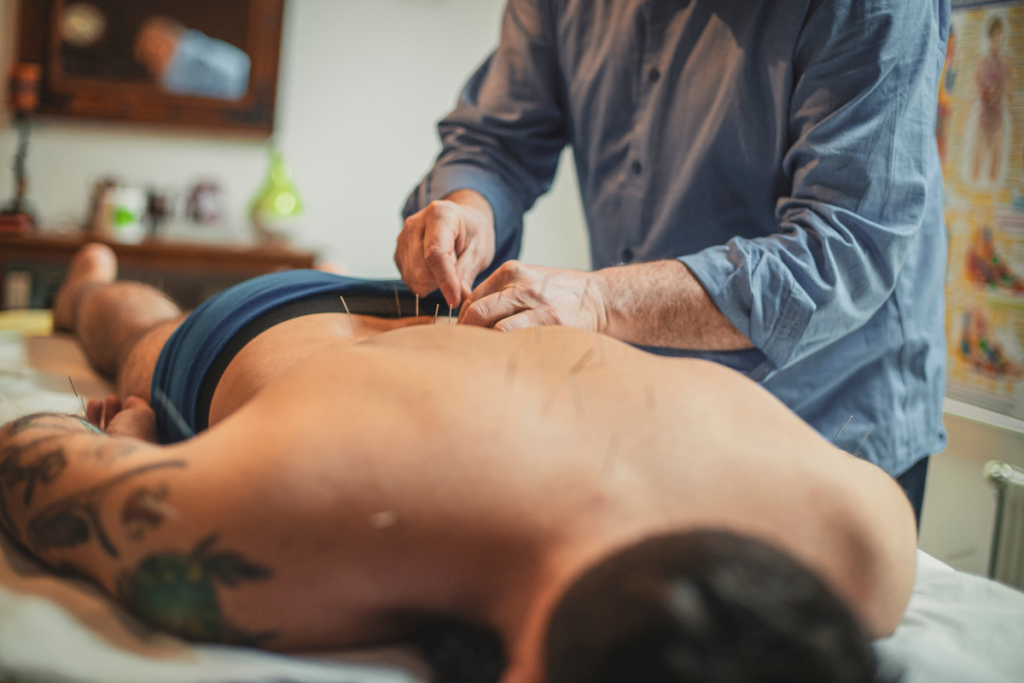
Low back pain is a difficult opponent. However, our various naturopathic methods face it with dignity. Acupressure, using pressure on specific points, and acupuncture, involving the use of fine needles, are effective therapies to help relieve pain and improve spinal function.
At MTS Holistic Therapy, we also offer physical therapy techniques when treating spinal pain. Radio wave, which uses electromagnetic energy, can effectively reduce pain. Shockwave works on the principle of sound waves and brings relief. Pinopressure, using gentle pressure on the vertebrae, helps to eliminate ailments. Massages, such as deep, fascial and therapeutic, are also effective relaxation techniques that reduce spinal pain.



