

Yoga is considered the path to perfection. It is an ancient philosophical system originating from India and has a huge following worldwide.
What is yoga?
According to one of the yoga masters Maheshwarananda, yoga is the path to God. In Sanskrit, the word has very many meanings, but the basic one is 'fusion, union', understood as union with God or as the unifying force of the universe. Another definition defines yoga as: "A tightly controlled process of deep concentration of consciousness, carried out under the guidance of an advanced teacher who has repeatedly tried on himself the methods recommended to the student."
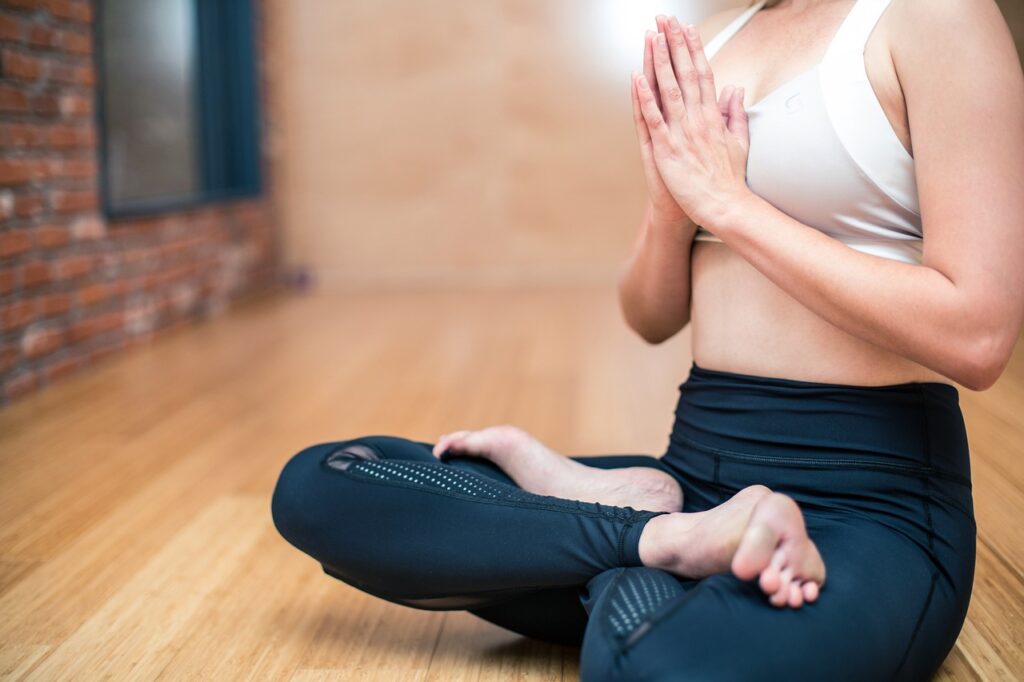
Commonly, however, yoga is referred to as so-called asanas. These are the body positions that practitioners adopt. The philosophy of this system, however, is based more on mental and spiritual than physical development. It considers the human being as a whole as body, mind and spirit in unity, and its techniques lead to their harmonisation. Its practice begins by rebalancing the muscles, deepening the breath and making it lighter.
Under the influence of yoga, the body's internal organs regain their natural energy. Practising heals the body by affecting all systems of the human body, makes the spine and skeletal system more flexible, stimulates the glands and internal organs. It also calms the mind, which receives increasingly harmonious signals from the body. It also has a profound effect on the psyche, relieving tension and anxiety and helping to maintain self-confidence and serenity.
History of yoga
The word "yoga" was first mentioned in the Wedach, writings dating back to 2500 BC. Its philosophical foundations are contained in the so-called eight-step path of yoga. These were collected and compiled in the Yogasutras, the first unified text on yoga. In the 20th century, yoga and Indian spirituality received increasing attention. It is now practised by huge numbers of people all over the world. It can be found in a wide variety of forms from the purely Hindu practices known as bhakti-yoga to the completely secularised gymnastic exercises of hatha- yoga.
Yoga and its eight-step path
The eight-step yoga path includes:
- Yamy - universal moral precepts, non-harming of others, truth, honesty, temperance, no greed.
- Nijamas - principles of conduct such as purity, contentment, enthusiasm or dedication.
- Asanas - yoga postures,
- Pranayama - control of vital energy by regulating and also maintaining full, steady breathing, allowing the mind to calm and concentrate.
- Pratyahara - or withdrawal of attention from the external world by directing it inwards,
- Dharana - a state of concentration maintained on a single object,
- Dhyana - a state called contemplation, achieved by maintaining prolonged concentration.
The ultimate goal of yoga is a state in which, through conscious concentration, there is a transformation and transcending of all limitations of consciousness referred to as samadhi.
Yoga - styles
There are many different styles of yoga with a rich tradition that are still practised today. They are based on the same postures but vary in emphasis and intensity.
Hatha-yoga includes many different types of yoga focused on the physical aspect. The most common focus is on simple breathing exercises and seated meditation. Vinyasa yoga leans more towards vigorous exercises. Ashtanga yoga is a fast and powerful style that is very physically demanding. Iyengar Yoga, on the other hand, focuses on working on body alignment and long endurance in postures. Kundalini yoga, on the other hand, combines intense physical exercise with meditation. There is also Hot yoga, which takes place in a heated room at 30-40 degrees C. Anusara yoga, on the other hand, is fun and accessible even to people with very little skill. Forrest yoga, on the other hand, serves to strengthen and purify the body and calm bad emotions.



