
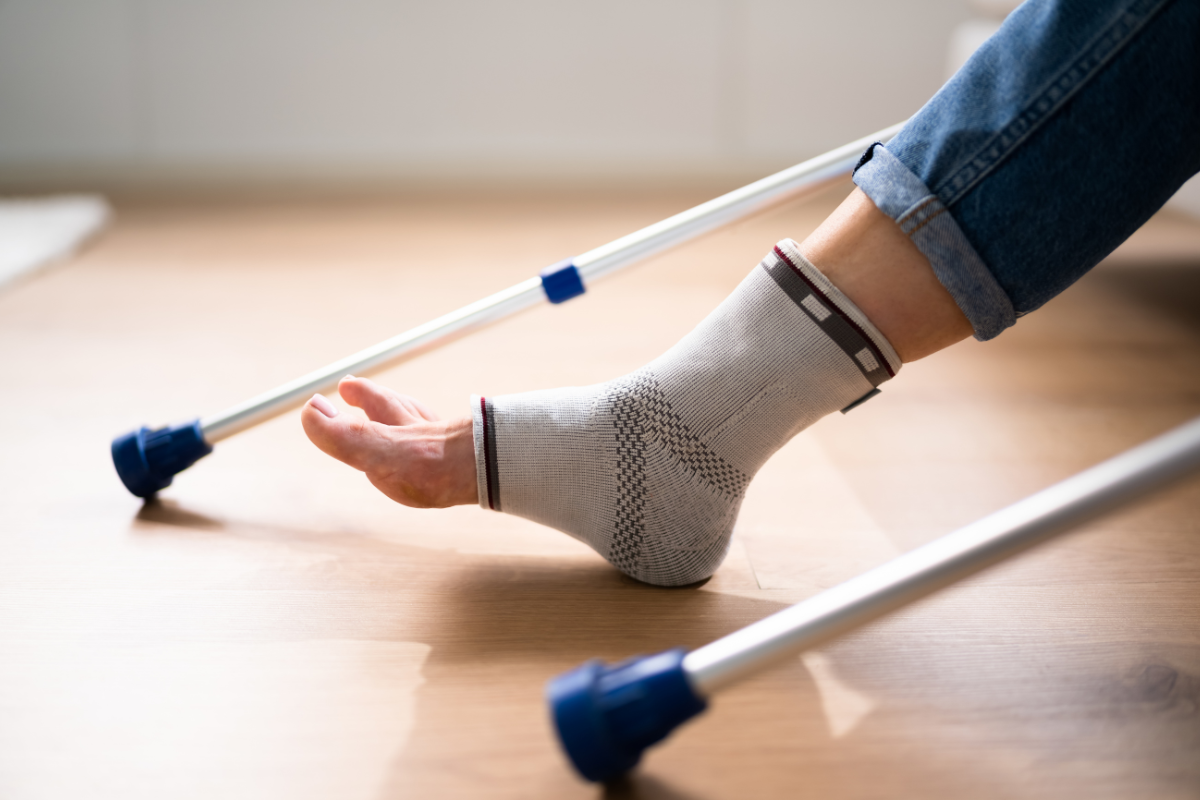
Ankle sprain, or in other words ankle sprainThis is one of the most common injuries. As it mostly occurs due to a sudden bending of the foot, usually when running, jumping or descending stairs, many such injuries occur during the holiday season when we walk, run or play football more. A sprained ankle joint should not be underestimated. It can cause chronic pain or even lead to degeneration of the joint.
What is an ankle sprain?
A sprain is an injury to a joint that occurs when it exceeds its physiological range of movement, causing damage to the surrounding soft tissues. These include the joint capsule, ligaments and muscle tendon attachments. The joint capsule holds the bones that make up the joint and creates the proper environment for the joint to work, preventing neighbouring tissues from getting between the bones and retaining joint fluid.
Ankle sprain - causes
An ankle sprain occurs quite easily, just by misplacing the foot during even simple walking. When it turns inwards or outwards while being subjected to the force of the body's weight, the ligaments and joint capsule stretch or even tear completely.
Sprain and tear of the ankle joint causes the range of movement of the foot to exceed its physiological capacity. This results in pain, swelling, sometimes bruising and haematoma. After such an injury, the risk of re-injury is very likely. Contributing factors include:
- overweight and obesity,
- poor physical condition,
- practising sport too intensively without adequate preparation,
- flat feet,
- other deformities of the limb affecting biomechanics,
- deep sensory disturbances,
- ligamentous flaccidity,
- muscular imbalance.
The most common type of injury is a lateral sprain, which results in excessive mobility in the ankle joint. When the sole of the foot twists inwards. An outward twisting of the foot is much less common and may be accompanied by fractures.
Ankle sprain and sport
Sport is good for everything, but care should always be taken when choosing to engage in any physical activity. Ankle sprain is one of the most common injuries encountered by sports people, especially those who engage in sports that require jumping, running or sudden changes of direction, such as football, basketball, tennis or running. A sprain usually occurs when the foot is rotated unnaturally, most commonly when landing after a jump or as a result of improper foot placement. The result is damage to the ligaments in the ankle joint, which can lead to pain, swelling and limited mobility. Well-conducted rehabilitation and appropriate prevention, such as strengthening leg muscles, improving joint stability and wearing appropriate footwear, are key to preventing this type of injury and speeding up recovery from injury. An ankle sprain, although painful, does not have to mean the end of a sports career if proper care is taken for recovery.
Acute ankle sprain
With acute ligament injury, tendon, bone and other soft tissue damage may accompany the injury. Therefore, the orthopaedist should assess whether an X-ray is necessary or whether ultrasound alone is sufficient. A severely sprained ankle with ligament damage can cause ankle instability and even sometimes the need for surgical treatment.
Degrees of damage to the ankle joint

The treatment time for a sprained ankle depends on the type of injury and the severity of the damage.
Grade I
- Strained or minimally torn ankle ligament,
- Minimal instability of the ankle joint,
- Slight pain,
- Slight swelling of the ankle joint area,
- Stiffness and impaired bending.
Grade II
- Moderate tearing of the ligament fibres,
- Instability in the joint,
- Pain that prevents normal walking,
- Swelling and stiffness in the ankle joint,
- Minor haematoma.
Grade III
- Complete tearing of the ligament fibres,
- Total joint instability,
- Acute pain,
- Severe oedema,
- Extensive haematoma.
Treatment of ankle sprain
Treatment of a sprained ankle involves both first aid and long-term rehabilitation of the ankle joint,
Initially, 4 basic steps are taken called the RICE procedure, or Rest, Ice, Compression, Elevation.
- Rest - rest. -break in physical activity,
- Ice - ice, or cold therapy. You can do this with a special ice-spray or simply put your foot under cold running water
- Compression. After cooling down, the injured ankle joint should be compressed with an elastic bandage,
- Elevation - lift the limb upwards. Keep the leg above heart level as often as possible.
Rehabilitation of the ankle joint
In the treatment of an ankle sprain it is essential to rehabilitation tailored to the patient, depending on the severity of the injury, the person's age and activity level. Its programme includes:
- reduction of pain and swelling,
- increasing the flexibility and strength of the joint,
- restoration of motor coordination,
- return to normal physical activity.
Ozone therapy for the treatment of joint sprains
Ozone therapy is a modern method to assist in the treatment of joint sprains. Ozone, with its anti-inflammatory and regenerative properties, helps tissues damaged by injury to heal faster. The introduction of ozone into the body, usually by injection into the joint area, stimulates micro-circulation, improves tissue oxygenation and accelerates regeneration processes. It also has an analgesic effect, reducing swelling and inflammation, allowing a quicker return to physical activity. Ozone therapy is safe and effective, especially when combined with traditional treatments such as rest, rehabilitation and a proper diet. Through its use, patients can enjoy faster treatment results and a return to full function after an ankle sprain.



