

Working in an office, at a computer or in high-performance sports that involve the hands are just some of the possible causes of pain in the wrists. This condition affects a large proportion of the population and can occur at any age. Wrist pain can significantly reduce the standard of living and may cause people to give up many of their favourite activities. Importantly, however, it can be easily prevented and treated. How to deal with this discomforting condition and what causes it?
Pain in the wrists - the most common causes
Most studies show that pain in the wrists is a symptom of conditions such as carpal tunnel syndrome, injuries such as bruises or fractures, gout, arthritis or inflammation. Pain in the wrists is therefore associated with real-life ailments that can affect anyone. People who work long hours at a computer are particularly at risk, such as programmers or graphic designers, but also athletes such as tennis players, professional drivers, construction workers and people who work a lot or otherwise engage their hands, especially the wrist, on a daily basis.
Although pain in the wrists can occur at any age, older people are definitely particularly vulnerable. The older we get, the more often degenerative bone diseases occur or the risk of injury increases. The same is true for professional athletes or hobbyists who spend a lot of time training. It is also worth noting that pain in the wrist can be a symptom of an illness, such as inflammation or gout. Therefore, any complaints should be consulted with a doctor. Especially if the pain is accompanied by swelling or fever.

Treatment of wrist pain - treatments, physiotherapy or pharmacotherapy?
There can be many causes of wrist pain. The same applies to treatment methods. Painkillers are a short-term solution, especially for bruises, but if the pain has persisted over a long period of time, a specialist should be consulted. In most cases, physiotherapy will be the most effective. Wrocław, Katowice, Warsaw and other large cities have specialist medical centres and surgeries that specialise in the treatment of pain in the wrists caused in particular by trauma, carpal tunnel syndrome or post-operative pain. In the case of inflammation, however, it is necessary to take medication and apply compresses.
In addition to classic physiotherapy, treatments such as whirlpool baths and laser therapy are great options, neuromobilisationsor magnetic field and ultrasound treatments. In extreme cases, surgery or the wearing of special stabilising bands or even a plaster may be necessary. However, even after surgery it will be necessary to have appropriate rehabilitation.
Wrist pain and kinesiotaping
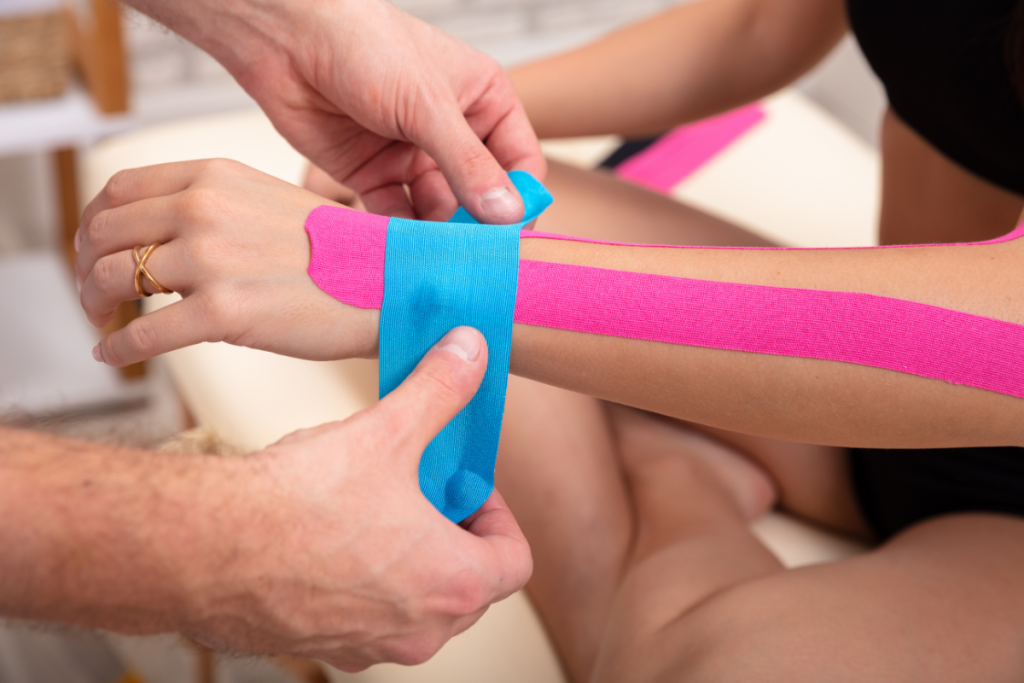
Kinesiotaping therapy is a recommended form of support for the treatment of carpal tunnel syndrome. This method involves the use of elastic patches that act dynamically throughout the time they are worn. As a result, even during everyday activities. Such as working at a computer, operating specialised equipment or cycling, the wrists are constantly protected. For those who spend long hours in the office at a computer, it is also important to adjust the ergonomic position of the hand on the keyboard:
- it is advisable to keep fingers, wrist and forearm aligned
- avoid typing with excessive wrist bending
- it is advisable to include a special wrist rest
- forearms should rest comfortably on the desk top.
Correct posture helps to avoid excessive strain. With weakened muscles, kinesiotaping tapes support and protect the delicate wrist joint, protecting it from injury. In combination with other rehabilitation methods, kinesiotaping speeds up the process of returning to full fitness.
Pain in the wrists - prevention
If we are at risk and are concerned about serious wrist discomfort, it is worth following certain methods to protect ourselves from the unpleasant feeling. The pain in the wrists caused by working at a computer can easily be reduced by taking breaks during work, and by doing simple exercises such as twisting the wrists, closing and opening the hands, or squeezing a soft anti-stress ball.
Home methods, which are great preventive measures, will also help in the fight against pain. First of all, it is worthwhile to ensure a proper diet, especially if you notice symptoms such as shooting or grinding in your joints. Calcium and collagen supplementation will also be appropriate. A cold compress should be applied to the first signs of pain or swellingy. Pherbal baths, e.g. of fenugreek or kale, may also be helpful. Then there is a good chance that you will miss the pain in your wrists caused by serious ailments.



